

Roman Austin | November 27, 2025 | Car Accidents
The scene of a car accident is one of chaos and confusion. In the immediate moments, your focus is on the one vehicle that hit you. It seems simple: one impact, one at-fault driver, one person to hold responsible. But as the details emerge, the picture often becomes far more complicated.
What if the driver who hit you was swerving to avoid another car that fled the scene? What if a company’s employee was speeding to make a delivery? What if a critical part of the vehicle failed? The question of whether multiple parties can be held liable for a single accident is not just a legal curiosity; it is often the key to securing the full and fair compensation you need to recover from serious injuries.
The chain of responsibility:
A car accident claim is rarely a simple, linear event. It is often a chain reaction of failures, and the law allows for accountability at every broken link.
- Liability for a car accident is not always limited to the driver who made the final impact. It can extend to other drivers, vehicle owners, employers, and even government entities.
- Florida’s comparative fault law is the legal mechanism that allows a jury to assign a percentage of blame to each responsible party, including the injured person.
- A deep and thorough investigation is the only way to uncover all the contributing factors and identify every person or company that shares responsibility for your injuries.
The Myth of the Single At-Fault Driver

The most obvious conclusion is not always the correct one. The driver who physically collided with your vehicle may only be one piece of a much larger puzzle. A proper legal analysis examines the root causes of the crash, looking beyond the point of impact.
Why initial impressions at the scene are often incomplete
In the stressful moments after a car collision, it is natural to focus on the most immediate threat. However, the true cause of the accident may have occurred seconds before the impact and involved parties who never even touched your car. A complete picture requires looking at the entire sequence of events, not just the final frame.
A single accident may have several contributing causes. Uncovering these hidden factors is essential for a complete claim.
- A phantom vehicle that makes an unsafe lane change, forcing another driver to swerve into you.
- A commercial truck with an improperly secured load that falls into the roadway, causing a chain reaction.
- A dangerous road condition, like a malfunctioning traffic signal, that gives two drivers a green light at the same time.
- A passenger in the at-fault vehicle who was fighting with or distracting the driver at a critical moment.
How Florida’s comparative fault law works
Florida law acknowledges that responsibility for an accident is not always a 100% or 0% proposition. The legal doctrine governing this is comparative fault, as outlined in Florida Statutes § 768.81. This law instructs a jury to look at the actions of every person involved in an accident, including the injured party, and assign a percentage of fault to each.
When the Driver is Not the Only Responsible Party
Sometimes, the driver’s negligence is clear, but they are not the only person or entity who can be held financially responsible. The law allows us to look “up the chain” to find other parties whose actions or legal status make them liable.
Holding a vehicle’s owner accountable
Florida’s dangerous instrumentality doctrine is a long-standing legal principle that holds the owner of a motor vehicle responsible for any harm it causes when someone else is driving it with their permission.
The law views a car, in the hands of a driver, as an inherently dangerous object. Therefore, the owner is held strictly liable for the actions of the person they entrusted with their vehicle.
Liability for an employee driving a company vehicle
When a person is working, their employer is generally responsible for their actions. This legal doctrine is known as respondeat superior, which is Latin for “let the master answer.” If a delivery driver, a cable technician, or any other employee causes a car accident while they are on the job, their employer is vicariously liable.
This is important because a company typically has a much larger commercial insurance policy than an individual driver’s personal auto policy. This provides a source of recovery for the catastrophic damages that are common in accidents with commercial vans and trucks. An investigation must confirm the driver was acting within the “course and scope” of their employment at the time of the crash.
Apportioning Fault Between Multiple Drivers
On Florida’s busy highways and intersections, it is common for the negligent actions of more than one driver to contribute to a single accident. The legal process for assigning responsibility in these situations is complex and depends heavily on a detailed, evidence-based investigation.
Liability in multi-vehicle and chain-reaction collisions
Multi-car pile-ups, especially common on highways like I-275, create a complicated web of liability. While the initial instinct is to blame the last car in a chain reaction, the law requires a deeper analysis. An investigation must determine the sequence of impacts and the actions of each driver involved.
A law firm works to answer several key questions to properly assign fault. The answers to these questions form the basis of the legal argument for how liability should be divided.
- Did the initial impact have enough force to cause the subsequent impacts, or was a middle driver also negligent for following too closely?
- Did a driver make an unsafe lane change that initiated the sequence of events?
- Were all drivers maintaining a safe following distance for the traffic conditions at the time?
An accident reconstruction expert may be retained to analyze the vehicle damage and physical evidence to create a scientific model of the crash. This expert analysis is often the key to proving how fault should be apportioned among the different drivers.
Pursuing a claim when the primary at-fault driver is unknown
Some of the most challenging cases involve a “phantom vehicle.” This occurs when a driver’s reckless action, such as an aggressive and unsafe lane change, forces another driver to take evasive action that results in a collision with a third party. The driver who caused the entire incident often flees the scene and is never identified.
The investigation must focus on proving the existence and negligence of this unknown driver. A law firm takes immediate action to gather any available evidence, such as testimony from other car accident witnesses who saw the phantom vehicle or surveillance footage from nearby businesses that may have captured the event.
If the existence of the phantom driver can be proven, the injured party may be able to file a car accident claim under their own Uninsured Motorist (UM) insurance coverage. This coverage is specifically designed to stand in for the liability insurance of an at-fault driver who cannot be found.
Tracing Liability Beyond the Drivers
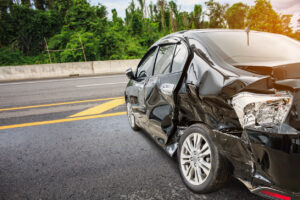
In some complex cases, the cause of the accident has nothing to do with the drivers’ actions at all. The fault may lie with a government entity that failed to maintain a safe road or a manufacturer that produced a defective and dangerous vehicle.
A government entity’s failure to maintain safe roads
The city, county, or state has a duty to properly design and maintain the roads they control. If they fail in this duty, they can be held liable. This might happen if a large, known pothole is left unrepaired for months and causes a driver to lose control, or if a traffic signal malfunctions and creates a hazard.
Claims against government entities are very difficult. They are protected by sovereign immunity, which limits their liability. These claims have very strict and much shorter notice requirements than a standard lawsuit. A formal notice of claim must often be filed within months of the accident, not years.
Mechanical failure and product liability claims
A driver may do everything right, but their vehicle may fail them at a critical moment. If a crash is caused by a sudden mechanical failure, the investigation shifts to the vehicle itself. This is known as a product liability claim.
- A design defect: This alleges the vehicle was designed in an unreasonably dangerous way. For example, a certain model of SUV may have been designed with a center of gravity that was too high, making it inherently prone to rolling over.
- A manufacturing defect: This alleges that while the design was safe, a specific error during the assembly process made one particular vehicle dangerous. This could be a single faulty weld or a contaminated batch of brake fluid.
Proving a product liability case is a massive undertaking. It requires a team of engineers to inspect the vehicle, analyze the broken parts, and provide expert testimony that the defect, not the driver, was the cause of the crash.
Should You Use AI for Complex Liability Questions?
You could ask an AI tool who is at fault for a multi-car accident. The AI will give you a textbook definition of negligence. It cannot, however, conduct the complex investigation needed to answer that question for your specific case.
An AI cannot subpoena the maintenance records for a company truck that hit you. It cannot hire an engineer to prove a tire defect caused a blowout. It does not know how to apply Florida’s dangerous instrumentality doctrine to the owner of the vehicle.
For a question that requires a deep, fact-finding investigation and the strategic application of multiple legal doctrines, a generic algorithm is completely useless.
Frequently Asked Questions
What if I think I was partially at fault for the accident?
You should still speak with a car accident attorney. Your assessment of your own fault may not be legally correct. Even if you were partially at fault, under Florida’s comparative negligence law, you can still recover damages from the other at-fault parties. Your recovery would simply be reduced by your percentage of fault.
How does finding multiple at-fault parties affect my settlement?
Identifying multiple at-fault parties can significantly increase the potential for a full car accident settlement. It opens up multiple insurance policies that can be used to cover your damages. This is especially important in cases involving catastrophic injuries where the damages exceed the limits of a single driver’s insurance policy.
The crash only involved two cars. How could anyone else be responsible?
Even in a two-car crash, a third party may be liable. For example, the other driver’s employer could be liable if the driver was on the job. The owner of the car could be liable if they were not the driver. Or, if a mechanical failure caused the crash, the car’s manufacturer could be liable.
Does my PIP insurance matter when there are multiple at-fault parties?
Yes. Regardless of how many people were at fault for the accident, Florida’s no-fault law still requires you to use your own PIP insurance for your first $10,000 of medical bills and lost wages. A claim against the at-fault parties is for the damages that exceed your PIP coverage.
Building a Complete Picture of Your Case

An accident is rarely as simple as it first appears. Uncovering every party that shares responsibility for your injuries is the only way to ensure you have access to the full compensation you need to rebuild your life.
An experienced personal injury law firm has the resources and the knowledge to conduct the deep investigation these complex cases require. The team at Roman Austin Personal Injury Lawyers is ready to be your advocate.
Contact us today for a free, no-obligation consultation to discuss your car accident. We will listen to your story, analyze the potential sources of liability, and provide a clear path forward. Call our office at (727) 787-2500 or complete our online contact form.


