

Roman Austin | December 22, 2025 | Car Accidents

A trip to the store should be simple. You pull into the parking lot, find a space, and walk toward the entrance. It is a space we move through on autopilot, a place of low speeds and mundane routine. We simply do not expect danger. That is why an accident in a parking lot is so disorienting.
A driver backing out without looking, a pedestrian struck while pushing a cart, or a severe fall on a broken piece of pavement can happen in an instant. The injuries are often serious, and the question of who is responsible is surprisingly complex.
An analysis of the most dangerous parking lots in Clearwater reveals that these are not just random events; they are often the predictable result of poor design and negligent maintenance.
Your parking lot playbook:
The chaotic moments after a parking lot accident can leave you feeling lost. These points provide a clear map for the path forward.
- A parking lot is private property, but the owner has a legal duty to keep it reasonably safe for all visitors, including both drivers and pedestrians.
- Fault for an accident may be shared between a negligent driver and the property owner who allowed a dangerous condition to exist.
- Evidence like surveillance video and witness statements are exceptionally powerful in these cases, but this proof often disappears very quickly.
Why Clearwater Parking Lots Are So Hazardous
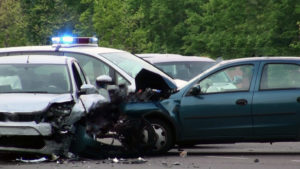
While any parking lot can be dangerous, certain local factors in Clearwater and Pinellas County combine to create a uniquely high-risk environment. The constant flow of tourists, the design of our sprawling shopping centers, and intense competition for parking spaces all contribute to the problem. A property owner has a duty to account for these local conditions.
The impact of tourist traffic and driver unfamiliarity
Clearwater is a top tourist destination. The parking lots near Clearwater Beach, in particular, are filled with rental cars driven by people who are unfamiliar with the area. These drivers are often looking at their phones for directions, distracted by the scenery, or unsure of the lot’s layout. This unpredictability clashes with the routines of local drivers, leading to sudden stops, erratic turns, and a failure to see pedestrians.
Poor design and layout flaws
Many of our older shopping centers and strip malls were designed decades ago and are not equipped to handle modern traffic volume or larger vehicles. These design flaws can create inherent dangers that a property owner has a duty to address.
Inadequate maintenance and upkeep
A parking lot is not a static environment. It is subject to constant wear and tear from traffic and the Florida weather. A property owner’s failure to perform regular, diligent maintenance is a direct breach of their duty to keep visitors safe.
This negligence can manifest as dangerous cracks in the pavement, large potholes that can trip a pedestrian or damage a vehicle, or faded traffic lines that make lanes and stop bars nearly invisible.
The Legal Duty of a Property Owner
When you enter a Publix, Target, or Westfield Countryside parking lot, you are a legal “invitee.” Under Florida law, this status gives you the highest level of protection and imposes the highest duty of care on the property owner. This area of law, known as premises liability, is the foundation of a claim against a negligent property owner.
Explaining premises liability in Florida
Premises liability is the legal principle that holds a property owner or manager responsible for injuries that occur on their property due to a dangerous condition. For a business that is open to the public, this is not a passive responsibility. They cannot just wait for someone to report a problem.
They have an active, ongoing legal obligation to inspect their property for potential hazards, repair those hazards in a reasonable amount of time, and warn visitors of any dangers that cannot be immediately fixed.
The concept of actual and constructive notice
To hold a property owner liable, we must prove they knew or should have known about the dangerous condition that caused your injury. The law, specifically Florida Statutes § 768.0755, defines this as notice.
- Actual notice means an employee was directly told about the hazard. For example, if a shopper told a manager that a large oil slick was in a parking space, the store had actual notice.
- Constructive notice is more common. It means the hazard existed for such a long period that a reasonably diligent property owner should have discovered it during their regular inspections.
Proving Constructive Notice in a Claim
Proving constructive notice is a matter of evidence and time. It requires a thorough investigation to establish that a hazard existed for a long enough period that a reasonably prudent property owner would have discovered it.
A law firm works to build a timeline to demonstrate this failure of diligence, using specific legal tools to uncover proof that the property owner should have known about the danger.
Demanding internal corporate documents
Our first step is to use the legal discovery process to demand the company’s internal records. These documents often contain the most powerful evidence of how long a hazard was ignored. We can formally compel the production of store inspection logs, sweep sheets for specific aisles, and janitorial schedules.
Finding and interviewing key witnesses
Witness testimony is a vital component of proving notice. We work to identify and interview not just other customers who may have seen the hazard, but also current and former employees.
Former employees, in particular, can provide invaluable testimony about the store’s actual, day-to-day safety practices, which often fall short of the official corporate guidelines. Their statements can confirm that a dangerous condition was a known, recurring problem that management failed to adequately address.
Using digital and physical evidence to build a timeline
A digital footprint is a powerful tool. We use evidence such as geo-tagged social media posts, Google Maps street view history, or even satellite imagery to determine the duration of a static, outdoor hazard, like a broken curb or a large pothole.
Common Types of Accidents in the Most Dangerous Parking Lots in Clearwater

The chaotic environment of a busy parking lot leads to several predictable types of accidents. While they may happen at low speeds, the injuries can be severe, especially when a pedestrian is involved.
Pedestrian knockdown accidents
This is one of the most serious types of parking lot accidents. Drivers are often focused on finding a parking space and not on the people walking around them. A driver who speeds down a main lane or cuts across empty rows of parking spaces can easily strike a pedestrian who is walking from their car to the store, often leaving victims needing guidance from an experienced car accident lawyer to pursue compensation.
Backover and pull-out collisions
The design of many vehicles, especially large SUVs and trucks, creates significant blind spots. A driver who fails to properly check their mirrors and backup camera before pulling out of a space can easily strike a person walking behind their vehicle or collide with another car that is rightfully passing. These accidents often point to driver inattention as the primary cause.
Slip and fall or trip and fall incidents
The surface of a parking lot itself can be the most dangerous hazard. A property owner’s failure to maintain the pavement can lead to devastating falls.
Building a Case After a Parking Lot Injury
Evidence in a parking lot accident case is fragile and often controlled by the very company you need to hold accountable. A swift and strategic investigation is necessary to preserve the proof you need to win your claim.
The race to preserve video evidence
Video surveillance cameras monitor most large retail and grocery store parking lots in Clearwater. This footage is often the single most important piece of evidence. It can show exactly how a driver was behaving, how long a spill was on the ground, or what the lighting conditions were at the time of your fall. However, this footage is usually recorded on a loop and may be erased in a matter of days.
The first action a law firm takes is to send the property owner a formal spoliation letter, a legal demand that they preserve all video evidence related to your accident.
What an investigation uncovers
A deep investigation goes far beyond just reviewing a video. A law firm uses the legal process to obtain internal corporate documents that can prove a pattern of negligence.
- Incident reports: We demand a copy of the internal report the manager created after your accident.
- Maintenance logs: These documents show how often, or how infrequently, the property owner inspected the lot for hazards.
- Sweep sheets: For an indoor fall, these logs show when an employee last walked the aisle.
- Contracts with third parties: Sometimes, a separate company is hired for landscaping or lot maintenance, and that company may also be a liable party.
The role of witness testimony
An independent witness who saw what happened is incredibly valuable. They have no financial stake in the outcome and can provide a clear, unbiased account of the events. This could be another shopper who saw the driver speeding or a person who almost slipped on the same spill moments before you did. An investigator can locate and interview these witnesses to lock in their testimony before their memory of the event fades.
The Problem with Using AI for Legal Advice
You might be tempted to use an AI tool to ask questions about your parking lot accident. While an AI can give you a generic definition of premises liability, it has no capacity to help you in a real-world scenario.
An AI cannot send a spoliation letter to a Clearwater Target to preserve a video before it is erased. It does not know how to analyze a store’s internal maintenance logs to prove constructive notice under Florida law. It cannot hire an engineer to inspect a poorly designed parking lot for building code violations tasks that require an experienced personal injury lawyer.
Relying on an algorithm for guidance in a case that depends on swift, strategic action and a deep knowledge of local procedures is a serious mistake.
Frequently Asked Questions
Who is at fault if two cars are backing out of spaces and hit each other?
In this common scenario, fault is often shared between the two drivers. An insurance company will look at the points of impact and any witness statements to determine if one driver was predominantly at fault. Under Florida’s comparative negligence law, each driver may be held partially responsible.
What if I was hit by a car while walking in a driving lane, not a crosswalk?
You still have a strong case. While pedestrians should use crosswalks when available, drivers have a duty to be aware of their surroundings at all times. A driver in a parking lot should reasonably expect that people will be walking to and from their cars in all areas of the lot.
I tripped on a cracked sidewalk in a shopping center. Who is responsible?
The responsibility likely lies with the property management company or the owner of the shopping center. They have a duty to maintain all common areas, including sidewalks, in a safe condition.
How long do I have to file a lawsuit for a parking lot accident?
In Florida, the statute of limitations for a personal injury claim based on negligence is generally four years from the date of the accident. However, because evidence like video footage disappears so quickly, it is highly advisable to contact a legal professional as soon as possible.
Your First Step Toward Justice
An injury in a place you trusted can leave you feeling powerless. You have the right to hold a negligent driver or a careless property owner accountable for the harm they caused.

Contact us today for a free, no-obligation consultation to discuss your case. We will listen to your story, explain your options, and answer all of your questions. Call our office at (727) 787-2500 or complete our online contact form.
Roman Austin Car Accident and Personal Injury Lawyers – Clearwater Office
1811 N. Belcher Road, Suite I-1
Clearwater, FL 33765
(727) 787-2500


