

Roman Austin | November 10, 2025 | Bicycle Accidents
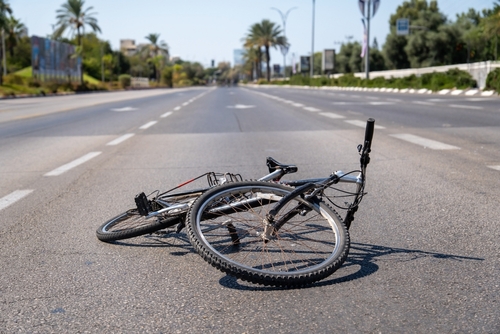
Bayshore Boulevard is the heart of Tampa’s waterfront. It is a ribbon of scenic pavement where the city meets the bay, a place for exercise, reflection, and enjoying the simple pleasure of a bike ride.
The view of the downtown skyline on one side and the open water on the other creates a sense of peaceful escape. This idyllic setting makes the sudden, violent reality of a bicycle accident all the more traumatic.
One moment you are pedaling along the world’s longest continuous sidewalk; the next, you are on the ground, in pain, your ride and your routine shattered by a driver’s carelessness. If this has happened to you, you are likely facing a difficult recovery and a host of questions about your rights.
The process of filing a personal injury claim after a bicycle accident on Tampa’s Bayshore Boulevard can feel daunting, but it is your path to holding the negligent driver accountable.
The rider’s roadmap
The aftermath of a Bayshore bike crash is confusing. These essential points can help you find your direction and protect your rights.
- Bicyclists have a legal right to share the road and the path. Drivers who fail to respect this right through distraction, speeding, or impairment can be held liable for the injuries they cause.
- The “bike lane” on Bayshore is technically a wide sidewalk, which creates unique legal questions about fault and right-of-way that require careful analysis.
- Your injuries may be more serious than they first appear. Documenting everything and seeking a full medical evaluation is a fundamental step for both your health and your potential bicycle accident claim.
- Preserving evidence is a race against time. The moments after the crash offer a brief window to gather information that can form the foundation of your case.
Establishing Negligence: The Core of Your Claim
A personal injury claim is not an automatic process. It requires proving that another person, the driver, was legally negligent and that their negligence directly caused your injuries. This legal concept is built on several key pillars.

Defining a driver’s duty of care to cyclists
Every person who gets behind the wheel of a car in Florida has a legal “duty of care” to operate their vehicle in a reasonably safe manner to avoid harming others.
This duty extends to everyone on or near the road, including other cars, pedestrians, and especially bicyclists, who are far more vulnerable. This is not just a moral obligation; it is a legal one. The law recognizes that a two-ton vehicle poses a significant threat to an unprotected rider.
Proving a breach of duty
A breach of duty occurs when a driver’s actions fall short of that reasonable standard of care. This is the act of negligence itself. On Bayshore, these breaches are tragically common.
Imagine a driver is heading south on Bayshore. Instead of watching the road, they are mesmerized by a pod of dolphins in the bay. Their attention drifts for just a few seconds as they approach the intersection at W Swann Avenue.
A cyclist, following all the rules, is crossing the intersection from the sidewalk. The distracted driver fails to see the cyclist and makes a right turn, striking them. The driver’s failure to maintain a proper lookout, especially in an area known for heavy pedestrian and cyclist traffic, is a clear breach of their duty of care.
Causation: Connecting the driver’s action to your injury
The final piece of proving negligence is causation. Your legal team must demonstrate that the driver’s breach of duty was the direct and proximate cause of your injuries.
This means showing a clear link between their careless action and the harm you suffered. In the scenario above, the connection is clear: the driver’s failure to watch the road directly caused the collision, which in turn caused the cyclist’s broken leg and other injuries.
Without the driver’s negligent act, the cyclist would have passed through the intersection unharmed.
The Investigation Process
A strong personal injury claim is built on a foundation of solid evidence. The initial moments after the crash are chaotic, but a swift and thorough investigation can uncover the facts needed to prove your case.
Gathering critical evidence from the scene
The physical evidence from the scene of the accident is powerful and fleeting. A legal team works quickly to preserve it. This involves dispatching investigators to take high-resolution photographs of the scene from multiple angles, documenting the final resting positions of the bicycle and the car, and capturing images of any skid marks or debris on the pavement.
They also work to identify and interview any witnesses, such as joggers or other drivers, who saw the crash and can provide an unbiased account of what happened.
Uncovering digital evidence
Investigations extend beyond the physical scene. A legal team may send a spoliation letter to the at-fault driver, a formal demand that they preserve their cell phone.
An analysis of the phone’s records can show if the driver was texting, talking, or using an app at the moment of the crash, providing undeniable proof of distraction.
Furthermore, Bayshore Boulevard is lined with high-rise condominiums and expensive homes, many of which are equipped with high-definition security cameras.
An investigation includes canvassing these properties to find footage that may have captured the entire accident, offering a clear and indisputable view of the driver’s negligence.
Accident reconstructionists
In cases where the fault is disputed, an accident reconstructionist can be an invaluable asset. This is a highly trained professional, often with a background in engineering and law enforcement, who can scientifically recreate the accident.
They analyze vehicle damage, debris fields, and physical forces to determine factors like the vehicle’s speed at impact, the angle of the collision, and the sequence of events. Their expert report can be a compelling piece of evidence that dismantles the insurance company’s attempts to shift blame.
Calculating the Full Scope of Your Damages

A bicycle accident can inflict devastating losses that go far beyond a broken bike. A personal injury claim is designed to fight for compensation for the full spectrum of these damages, both economic and non-economic.
Documenting your immediate and future medical costs
This is the most straightforward category of damages. It includes every medical bill related to the accident, from the initial ambulance ride and emergency room treatment at Tampa General Hospital to any surgeries, hospital stays, and prescription medications.
Crucially, it also includes the projected cost of your future medical care. A serious injury, like a traumatic brain injury or a spinal cord injury, can require a lifetime of treatment.
A bicycle accident attorney works with your doctors and life care planning professionals to calculate the cost of future physical therapy, necessary home modifications, ongoing care, and any other medical needs you will have for the rest of your life.
Proving lost wages and diminished earning capacity
If your injuries prevent you from working, you have a right to seek compensation for the income you have lost. This is proven with documentation like pay stubs, employment records, and tax returns.
For those with catastrophic injuries, the damage to their career can be permanent. “Diminished earning capacity” is a damage category that accounts for the loss of future income.
Valuing the pain, suffering, and loss of enjoyment
This is compensation for the human cost of the accident. It is designed to acknowledge the physical pain, emotional distress, and mental anguish you have endured.
It also covers your “loss of enjoyment of life.” For an avid cyclist, this is a profound loss. It is compensation for the fact that you can no longer enjoy your passion, the freedom of riding along the bay, or the physical and mental health benefits that came with it.
Florida’s Laws and Your Bicycle Accident Claim
Florida has specific statutes that govern the interactions between vehicles and bicycles. Understanding these laws is essential for your case.
How Florida’s comparative negligence rule works
Insurance companies will often try to shift blame onto the cyclist. They might argue you were not visible enough or that you swerved unexpectedly. Florida operates under a comparative negligence system.
This means that if you are found to be partially at fault for the accident, your final compensation can be reduced by your percentage of fault. According to Florida Statutes § 316.2065, bicyclists must obey all traffic controls and signals.
If an investigation shows that the cyclist was 10% at fault for the accident, their final award of $100,000 would be reduced by 10%, to $90,000.
A personal injury attorney attorney’s job is to use the evidence to fight these allegations and prove the driver was fully, or at least overwhelmingly, at fault.
The Problem with AI for Hyper-Local Injury Claims
You might ask an AI tool for information about your bicycle accident. The AI can tell you the definition of negligence, but it cannot help you in any practical way.
An AI does not know that the Bayshore “bike lane” is legally a sidewalk, which changes how right-of-way is determined. It cannot send an investigator to pull security footage from the Virage or Bayshore Diplomat condos. It cannot analyze the specific lighting conditions at sunset that may have affected visibility.
For a claim that depends so heavily on local knowledge and specific facts, relying on a generic algorithm is a serious mistake.
FAQ for Bayshore Boulevard Bicycle Accidents
What if I wasn’t wearing a helmet? Can I still file a claim?
Yes. In Florida, adults are not legally required to wear a helmet while riding a bicycle. While the insurance company may try to argue that your failure to wear a helmet contributed to your head injuries, it does not prevent you from filing a claim. An attorney can fight back, arguing that the driver’s negligence caused the crash in the first place, and a helmet would not have prevented your other injuries, like a broken leg.
The driver who hit me was speeding. How does that affect my case?
Speeding is a clear breach of a driver’s duty of care and is strong evidence of negligence. It shows a reckless disregard for the safety of others, especially vulnerable cyclists. Evidence of speeding, whether from witness testimony, surveillance footage, or an accident reconstructionist’s report, can significantly strengthen your claim.
Does my PIP car insurance cover me if I was on my bike?
It might. In Florida, your Personal Injury Protection (PIP) coverage can sometimes extend to cover you as a pedestrian or a cyclist if you are struck by a motor vehicle. This is a complex area of insurance law, and an attorney can help you review your policy to determine if you can access these benefits for your initial medical bills.
How long do I have to file a bicycle accident lawsuit in Tampa?
Florida has a statute of limitations that sets a strict deadline for filing personal injury lawsuits. Generally, you have four years from the date of the accident to file your claim. If you miss this deadline, you will likely lose your right to seek compensation forever.
Reclaim Your Ride
The road to recovery after a Bayshore bicycle accident can be long and challenging. You do not have to go through it alone. An experienced personal injury attorney can handle the legal battle, deal with the insurance companies, and fight for the full and fair compensation you need to rebuild your life.

The team at Roman Austin Personal Injury Lawyers is here to help.
Contact us today for a free, no-obligation consultation to discuss your case. We will listen to your story and provide clear guidance on your next steps.
Call our Tampa office at (813) 694-3054 or complete our online contact form.
Roman Austin Car Accident and Personal Injury Lawyers – Tampa Office
6601 Memorial Hwy Suite 202
Tampa, FL 33615
(813) 686-7588


