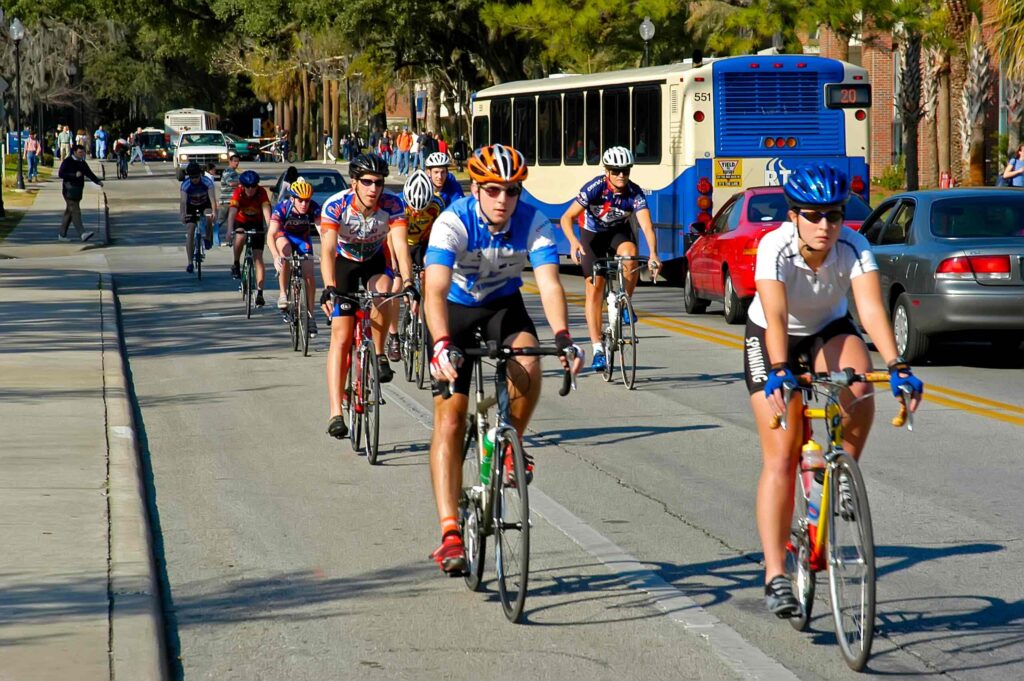
Florida group riding law gives cyclists on the November 7 Not Just a Cyclist ride more room than many people realize: two abreast within one lane, stop sign crossings in groups of up to 10, and a three-foot pass from every driver. Still, a common belief lingers, even among some riders, that a group on the road is asking for trouble. Florida's statutes say otherwise.
That misconception matters most after a crash. If a driver hit you while you rode with others around Clearwater, you may hear that the group was in the way or that riding in a pack means accepting the risk. Neither argument matches how Florida law actually works.
Meanwhile, you may be living with a broken collarbone, a cracked frame, and weeks off the bike you rely on for fitness, friendships, or your commute. A Clearwater bicycle accident attorney can sort out who was responsible and what coverage applies, and a free consultation lets you ask those questions before committing to anything.
Key Takeaways: Group Riding Law and Liability in Florida
- Group Riding Is Legal Riding: Florida allows cyclists to ride two abreast within a single lane, so riding with others doesn't make you the problem.
- Drivers Owe the Whole Group a Safe Pass: The three-foot passing rule and the right-turn rule protect every rider in the pack.
- Another Rider Can Share Responsibility: A cyclist who causes a crash through careless riding may owe you compensation.
- Waivers Rarely Protect Drivers: A ride waiver generally covers the people who signed it and the organizer, not a motorist who hit the group.
- Your Auto Policy Can Cover You on a Bike: Florida PIP and uninsured motorist coverage often apply when a car strikes you while you're riding.
How do Florida group riding laws affect cyclists participating in the November 7 Not Just a Cyclist ride?
Florida group riding laws let cyclists on the November 7 Not Just a Cyclist ride travel two abreast within one lane and cross stop signs in groups of 10 or fewer after a full stop, while drivers must still give every rider a safe pass. The key rules include:
- Two abreast, one lane: Riders may ride side by side but must stay in one lane and can't block traffic when moving slower than the flow.
- Stop signs in small groups: After a full stop, riders may cross in groups of up to 10 at a time.
- Three feet to pass: Drivers must leave at least three feet when passing a cyclist.
Following these rules keeps the group legal and makes fault clearer if a crash happens.
What Does Florida Group Riding Law Allow Cyclists to Do?
Florida group riding law allows cyclists to ride two abreast within one lane, cross stop signs in groups of 10 or fewer, and expect drivers to pass with care. Florida bicycle safety laws also treat a bicycle as a vehicle, so every rider carries both the rights and the duties of a driver.
Riding Two Abreast Under Florida Group Riding Law
Florida group riding law lets cyclists ride no more than two abreast, as long as they stay within a single lane and don't impede traffic while moving slower than the normal flow. In a bike lane, two riders may ride side by side only if both fit inside it; otherwise, they ride single file.
On a substandard-width lane, meaning one too narrow for a car and a bike to share safely, riders may go two abreast only briefly to avoid a hazard or pass another cyclist. Many ride leaders call for single file on narrow stretches for exactly this reason.
Crossing Stop Signs in Groups of 10 or Fewer
After coming to a full stop, cyclists riding in a group may proceed through a stop sign in groups of 10 or fewer at a time. Drivers waiting at the intersection are expected to let one group clear before moving forward.
The rule keeps a 40-rider pack from turning a four-way stop into a long standoff. Instead, riders cross in predictable batches, and drivers get predictable gaps.
What Drivers Owe a Group of Cyclists
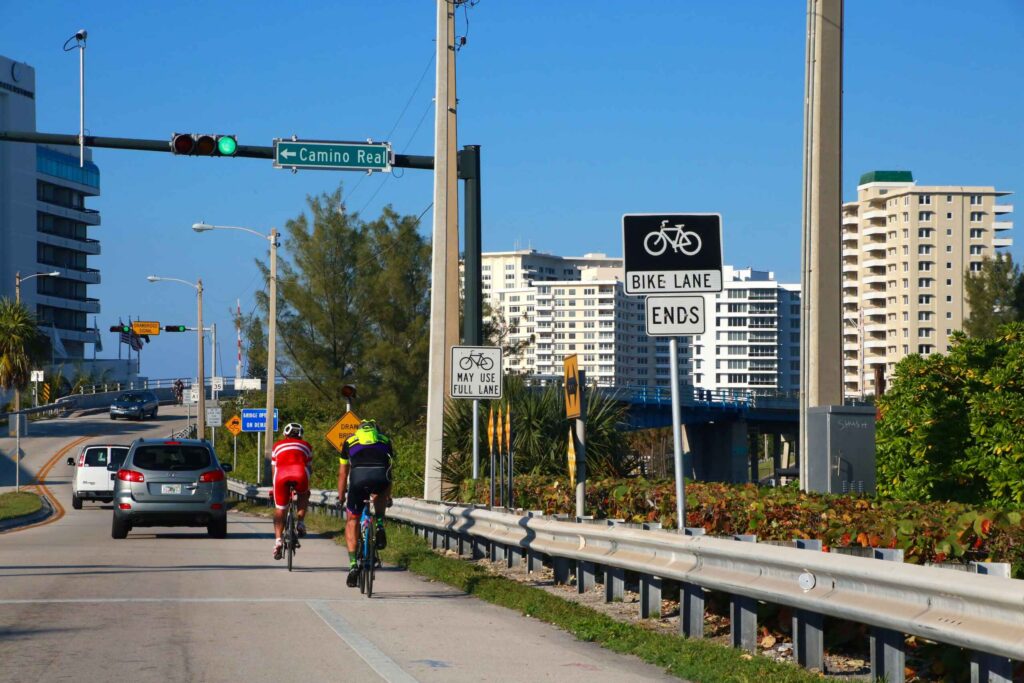
Drivers owe a group of cyclists the same care they owe any single rider, starting with at least three feet of space when passing. Florida also lets drivers briefly cross the center line in a no-passing zone to overtake a bicycle when doing so is safe.
Right turns carry a specific rule. A driver passing cyclists and turning right may do so only if the bicycle is at least 20 feet from the intersection. That rule targets the right hook, a crash every experienced rider has seen or narrowly avoided.
Who Is Liable When a Crash Breaks Up a Group Ride?
Liability for a group ride crash falls on whoever acted carelessly, whether that's a driver, another rider, an organizer, or the agency that maintains the road. Florida cycling group ride liability often involves more than one party, and each share of fault affects your recovery.
When a Driver Violates Florida Group Riding Law
A driver who violates Florida group riding law protections, such as the three-foot passing rule or the right-turn rule, can be held responsible for the injuries that follow. Common examples include squeezing past a paceline on a two-lane road, turning right across riders, or pulling out from a side street without seeing the group.
The driver's liability insurance, if the driver carries it, usually pays damages beyond your own coverage. Evidence often comes from rear-facing bike cameras, GPS ride files, and other riders, so gathering names from the group early helps.
Can Another Rider Be Responsible for Your Crash?
Yes, another cyclist can be responsible for your crash if they rode carelessly. Florida applies ordinary negligence rules to cyclists, and its courts have largely folded assumption-of-risk arguments into comparative fault.
A rider who brakes hard without warning, overlaps wheels, or swerves without calling out a hazard may owe you compensation. Coverage usually comes from that rider's homeowner's or renter's policy rather than auto insurance. Many riders hesitate to claim against a friend, but that insurance exists for exactly this situation.
Does a Ride Waiver Protect the Driver Who Hit You?
No, a ride waiver generally doesn't protect a driver who hit you, because the driver never signed it. A waiver is a contract, and it usually covers only the people and organizations it names.
Florida courts do enforce clear waivers between riders and event organizers, but they read them narrowly. A waiver typically won't excuse intentional misconduct. If you signed one, keeping a copy lets an attorney review exactly what it covers.
Here's how responsibility can spread across a group ride crash:
| Possible Party | Example | Coverage That May Apply |
| Driver | Passing too close or turning right across the group | Driver's liability policy, your PIP and uninsured motorist coverage |
| Another Rider | Sudden braking or swerving without warning | Rider's homeowner's or renter's policy |
| Ride Organizer | Ignoring a known hazard on the planned route | Event liability policy, subject to any waiver |
| Government Agency | An unrepaired pothole or a dangerous drain grate | Claim under Florida's sovereign immunity rules |
| Bike or Parts Maker | A fork, wheel, or frame that fails in normal use | Manufacturer's product liability coverage |
A few legal terms shape these claims:
- Negligence: Careless conduct that falls short of how a reasonable person would act. Most bicycle claims rest on proving someone was negligent.
- Comparative fault: Florida's system for dividing blame by percentage. Your recovery shrinks by your share, and anyone more than half at fault recovers nothing.
- Uninsured motorist coverage: Insurance that pays when the at-fault driver has little or no coverage. In Florida, it often follows you onto your bike.
How Does Insurance Work in a Florida Group Riding Law Claim?
Insurance in a group ride claim depends on whether a motor vehicle caused the crash. A car-involved crash triggers auto coverage, including your own, while a rider-on-rider crash usually runs through homeowner's, renter's, and health insurance.
Your Auto Policy Rides with You
Your own auto policy often covers you on a bike when a car strikes you. Florida PIP generally pays part of your medical bills and lost income, and initial treatment within 14 days keeps those benefits available. If the driver carries little or no liability coverage, your uninsured motorist coverage may cover the gap.
Cyclists who don't own a car may still have PIP through a relative they live with. When no car is involved, PIP doesn't apply, so health insurance and the at-fault rider's policy do the work.
Does Riding Without a Helmet Affect a Florida Group Riding Law Claim?
Riding without a helmet doesn't bar an adult's claim under Florida group riding law, because Florida requires helmets only for riders under 16. An insurer may still argue that a missing helmet made a head injury worse and try to reduce the claim on that basis.
That argument tends to target head injury damages rather than a broken wrist or road rash. Medical records and crash reconstruction often show whether a helmet would have changed the outcome. If you wore one, keeping it as is preserves useful evidence.
What Can Riders Do to Protect a Claim Before and After November 7?
Riders can protect a potential claim mostly by saving data they already collect and preserving their equipment after a crash. Cyclists tend to track everything, and that habit pays off legally. Consider these approaches:
- Recording the ride: GPS head units and ride apps log speed, route, and time to the second, which can confirm where and how a crash happened.
- Running a rear-facing camera: Footage of a passing car often settles disputes about distance and speed.
- Knowing who rode near you: Names and numbers from nearby riders become witness accounts later.
- Leaving the bike and helmet as they are: Repairs or warranty returns can erase evidence of impact or a defect.
- Saving the event paperwork: Registration emails, waivers, and route maps show what everyone agreed to and where the group planned to ride.
Bringing these materials to a consultation gives an attorney a head start on the evidence.
Why a Lawyer Who Rides Matters in a Florida Group Riding Law Case
A lawyer who rides matters because group ride cases turn on details that non-cyclists often miss, such as how a paceline moves, why riders call out hazards, and what a right hook looks like from the saddle. Florida bicycle accident liability also depends on insurance layers and fault percentages that adjusters handle every day.
Our partner John C. Austin is an avid cyclist and the founder of Not Just a Cyclist, the campaign behind the November 7 ride. He leads our firm's bicycle work with a rider's eye for what went wrong, and he pushes back when an insurer blames the group instead of the driver.
Frequently Asked Questions About Bicycle Accident Claims in FL
How long do I have to file a bicycle accident claim in Florida?
Florida gives you two years from the date of the crash to file a negligence lawsuit. If a road hazard contributed, such as a pothole or a drain grate that catches a tire, Florida law requires written notice to the responsible agency within three years.
Claims against a state agency also require notice to the Department of Financial Services, while claims against a city or county go to that local government alone. The agency then has up to six months to respond before a lawsuit can move forward.
What if my frame or a component failed and caused the crash?
A defective part can support a product liability claim against the manufacturer or seller. Forks, handlebars, and wheels occasionally fail under normal riding. Holding on to the damaged parts, rather than shipping them back for a warranty replacement, keeps the evidence available for inspection.
Can I recover the cost of my bike and gear?
Yes, property damage is part of a claim against the person who caused the crash. That can include the bike, helmet, bike computer, lights, and clothing. Receipts, order confirmations, and repair estimates help show value, especially for high-end equipment an adjuster may not recognize.
What if a driver intentionally threatened or swerved at the group?
Intentional conduct can lead to criminal charges and can support a civil claim against the driver personally. Some auto policies exclude intentional acts, which may change where payment comes from. Video and a report to law enforcement carry extra weight in these situations.
Does a crash on the Pinellas Trail follow different rules?
Trail crashes follow the same negligence principles, but they rarely involve cars except at road crossings. A collision with another cyclist or a pedestrian may lead to a claim against that person's homeowner's or renter's policy. Pinellas County manages most of the trail, so a hazard there usually involves notice to the county rather than the state.
Get a Rider's Read on Your Crash from Roman Austin
Group riding in Pinellas County should feel like what it is: a Saturday morning with friends, a steady pace, and coffee afterward. When a driver's or another rider's carelessness ends that morning in an ambulance, you should have a lawyer who understands both the law and the ride.
We built Not Just a Cyclist around safer roads for riders, and John C. Austin brings that same commitment to every bicycle case our firm takes on. If you were hurt in a Clearwater bicycle crash someone else caused, reach Roman Austin at (727) 787-2500. Someone answers around the clock, the first conversation costs nothing, and we'll talk through what happened, rider to rider.

Mark S. Roman
Board Certified Civil Trial Attorney and Founder
Mark S. Roman is the founder of Roman Austin Car Accident and Personal Injury Lawyers and a Board Certified Civil Trial Lawyer, a credential held by fewer than 2% of Florida attorneys. A Tampa Bay native, he has practiced throughout Florida since 1986 and founded the firm in 1996 to represent injured people in his hometown.
He earned a B.S. in Journalism from the University of Florida in 1981 and his J.D. from Florida State University College of Law in 1986. Mark is AV Rated by Martindale-Hubbell, holds a perfect 10 AVVO rating, and belongs to the Multi-Million Dollar Advocates Forum. He has served on the Florida Bar Grievance Committee for both Pinellas and Pasco counties, chairing the Pasco committee.
Author's Bio

