Florida retirement communities offer a unique lifestyle where the golf cart replaces the family sedan. Residents in The Villages, Sun City Center, and On Top of the World use these vehicles for everything from grocery runs to visiting friends.
This freedom and convenience come with hidden dangers. The high density of golf carts sharing the road with passenger cars and delivery trucks creates a volatile environment.
A collision often results in devastating injuries that strip seniors of their independence. Determining fault in these private or semi-private enclaves presents unique legal challenges. You need to know who’s liable when a golf cart accident occurs in a retirement community to protect your financial future.
We know that a crash in a close-knit community involves complex social and legal dynamics. You might worry about suing a neighbor or taking action against your own homeowners’ association.
However, the cost of medical care for a serious injury can wipe out a retirement nest egg in weeks. You have the right to seek compensation from the parties responsible for your pain.
Our Clearwater golf cart injury lawyer will identify every liable party and every available insurance policy to cover your losses.
The Distinctive Legal Landscape of Retirement Communities
Retirement communities operate differently from standard municipalities. They often function as self-contained cities with their own traffic rules and road designations. Some roads are private property owned by the association, while others are public thoroughfares maintained by the county. This distinction changes how we approach liability.
Private vs. public roadways
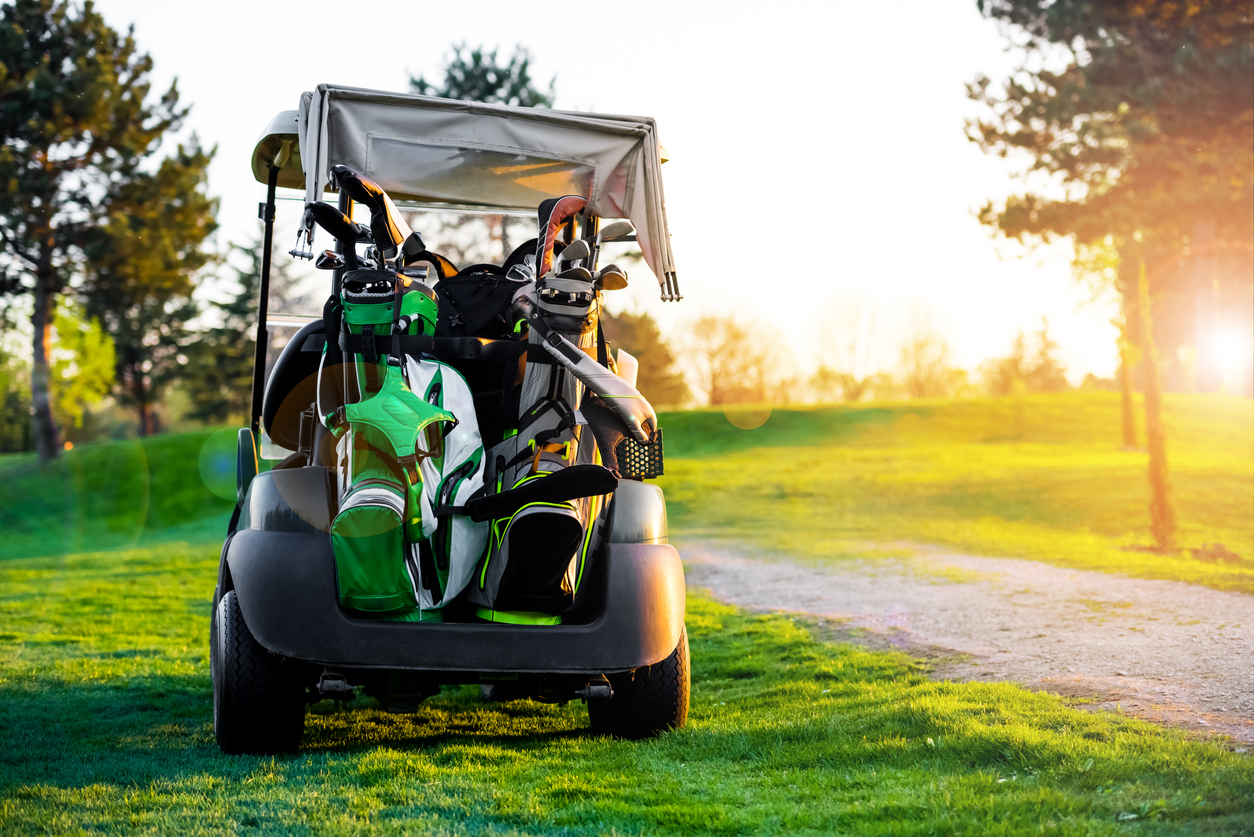
We must first determine if the crash occurred on a private road or a public street. Traffic laws regarding golf carts apply strictly on public roads. The rules on private roads often depend on the community covenants and deed restrictions. A driver might claim they did not violate a law because they were on private property. We analyze the community bylaws and the specific location of the crash to establish the standard of care the driver owed you.
Mixed-use traffic dangers
These communities feature a mix of traffic that rarely exists elsewhere. You have low-speed vehicles, standard golf carts, pedestrians, bicycles, SUVs, and commercial delivery trucks all using the same infrastructure. This mix creates confusion.
Drivers of standard cars often fail to judge the speed of a golf cart. Golf cart operators sometimes assume they have the right of way over larger vehicles. We investigate the specific traffic patterns of the community to prove how the other driver failed to share the road safely.
Liability of the at-fault driver
The most obvious liable party is the person driving the vehicle that hit you. Negligence in retirement communities often takes specific forms that differ from standard highway accidents.
Vision and reaction time deficits
We handle many cases where an older driver failed to see a golf cart or reacted too slowly to avoid a collision. Age-related vision decline and slower reflexes contribute to many crashes. A driver might merge into a golf cart lane because they simply did not register the smaller vehicle in their peripheral vision. We treat these sensitive situations with respect but we remain firm in establishing that physical limitations do not excuse negligence.
Distracted driving
Distraction affects drivers of all ages. Residents often look at GPS devices, talk to passengers, or handle phones while driving. Golf cart drivers are particularly vulnerable because they lack the protective shell of a car. A moment of distraction for a car driver can prove fatal for a golf cart rider. We subpoena phone records to determine if the driver was using a device at the moment of impact.
Impaired operation
Retirement communities often have a vibrant social scene that includes alcohol. Residents might drive their golf carts home from the club or a neighbor’s house after drinking. Florida law treats driving a golf cart under the influence the same as driving a car drunk. We investigate if alcohol played a role in the crash. A DUI charge serves as powerful evidence of negligence in a civil claim.
Liability of the Community Association
The Homeowners Association (HOA) or Property Owners Association (POA) has a duty to maintain the common areas in a reasonably safe condition. The association may bear liability if a defect in the community infrastructure caused or contributed to the accident.
Poorly maintained paths and roads
Golf cart paths require regular maintenance. Tree roots can buckle the asphalt. Potholes can develop. Overgrown hedges can block sightlines at intersections. A golf cart has small tires and a high center of gravity.
A sudden bump or pothole can easily cause the driver to lose control or eject a passenger. We investigate maintenance logs to determine if the association was aware of the hazard and failed to address it.
Negligent design and signage
The design of the community itself might be dangerous. Intersections might lack proper stop signs or yield signs. Golf cart crossings might be placed in blind spots. We hire traffic engineering professionals to evaluate the road design.
We can sue the association for creating a trap if the design fails to meet safety standards.
Gate malfunctions
Many retirement communities use automated gates to control access. These gates sometimes close prematurely on golf carts. A heavy metal gate striking a fragile golf cart can cause severe injuries to the occupants.
We investigate the maintenance history of the gate and the sensor settings to prove the association failed to keep the equipment safe.
Product Liability: When the Cart Fails
Sometimes the accident happens not because of a driver, but because the cart itself malfunctioned. Golf carts are machines that can fail due to design defects or manufacturing errors.
Brake failure
We investigate cases where a driver presses the brake pedal, but the cart fails to stop. This can lead to collisions at intersections or runaway carts on slopes. We work with mechanical engineers to inspect the braking system. We can pursue a product liability claim against the manufacturer if the brakes failed due to a defect.
Stability and rollover issues
Golf carts are prone to rolling over during sharp turns. Some models have stability issues that make them unreasonably dangerous. We investigate if the manufacturer failed to warn users about the rollover risk or if a design flaw made the cart unstable.
Battery explosions and fires
Electric golf carts rely on powerful battery banks. Defective batteries can explode or catch fire, causing severe burns to the occupants. We investigate the battery manufacturer and the charging system to determine the cause of the fire.
The Challenge of Insurance in Cart Accidents
Finding the money to pay for your injuries is often the hardest part of these cases. Insurance coverage for golf carts is notoriously complex and full of gaps.
The homeowners insurance myth
Many residents assume their homeowners’ insurance covers their golf cart liability. This is rarely true. Most homeowner’s policies contain a motor vehicle exclusion. This clause denies coverage for any motorized vehicle operated off the insured’s property. We analyze the policy language to see if the owner purchased a specific endorsement that extends coverage.
Golf cart-specific policies
Smart owners purchase specific golf cart insurance. These policies provide bodily injury liability and property damage coverage. We verify the limits of these policies. However, many residents carry only the minimum coverage or no specific coverage at all.
Uninsured motorist coverage
Your own auto insurance policy might save you if the at-fault driver has no insurance. Uninsured/Underinsured Motorist (UM) coverage can pay for your medical bills and lost wages.
However, auto insurers often deny these claims. They argue that a golf cart is not a motor vehicle under the terms of your auto policy. We aggressively challenge these denials. We utilize Florida case law to argue that you are entitled to the benefits you have paid for.
Protecting Your Claim During Recovery
The actions you take in the weeks following the accident influence the success of your claim. You must be proactive in protecting your interests while you recover.
Dealing with community gossip
Retirement communities are tight-knit social networks. News travels fast. Insurance investigators often interview neighbors to dig up information about you. We advise you to keep the details of your case and your medical condition private. Do not discuss the accident at the clubhouse or on the pickleball court. Assume that anything you say to a neighbor could end up in an adjuster’s file.
Consistent medical documentation
You must attend all your medical appointments. Gaps in treatment tell the insurance company that you are not in pain. If you miss physical therapy to attend a social event, the adjuster will use that against you. We help you manage the documentation of your care to create a solid record of your damages.
Identifying witnesses early
Witnesses in retirement communities may be seasonal residents (snowbirds). They might return to their northern homes shortly after the accident. We move quickly to locate and interview witnesses before they leave the state. We record their testimony to ensure we can use it even if they are not in Florida when the case goes to court.
FAQ: Liability in Retirement Community Cart Accidents
Can I sue my neighbor for a golf cart accident?
Yes. You can file a civil lawsuit against a neighbor if their negligence caused your injury. We handle these cases with discretion. We focus on dealing with their insurance company rather than creating personal conflict. The goal is to secure the resources you need for your medical care.
Does the community gate log help my case?
Yes. Gate logs provide a record of who entered and exited the community. This can help us identify a delivery driver or a guest who caused an accident and then fled the scene. We demand these records from the association immediately.
What if I wasn’t wearing a seatbelt?
Standard golf carts often do not have seatbelts. The defense cannot blame you for failing to use safety equipment that the vehicle did not have. However, if the cart had seatbelts and you failed to use them, the defense might argue comparative fault. We fight to show that the crash caused your injuries regardless of the seatbelt.
Can I claim if a landscaper hit me?
Yes. Commercial landscaping companies usually carry significant liability insurance policies. We can pursue a claim against the company for the negligence of their employee. We investigate whether the worker was on the clock and acting within the scope of their employment.
Is the golf cart path considered a road?
The legal classification of a path depends on the specific design and local ordinances. Some paths are designated as parts of the roadway system, while others are considered recreational trails. This distinction affects which traffic laws apply. We research the specific designation of the path where you were hurt.
We Fight for Your Dignity and Recovery
A golf cart accident in a retirement community threatens the lifestyle you worked a lifetime to achieve. You face physical pain, medical debt, and the loss of your independence. The parties responsible for your injury should bear the cost of your recovery.
Roman Austin Personal Injury Lawyers brings the legal firepower necessary to hold them accountable. We manage complex insurance issues and community politics so you can focus on getting better.
We invite you to contact us for a discussion about your case. We can help you understand your rights and identify every path to compensation. Contact Roman Austin Personal Injury Lawyers today.

Mark S. Roman
Board Certified Civil Trial Attorney and Founder
Mark S. Roman is the founder of Roman Austin Car Accident and Personal Injury Lawyers and a Board Certified Civil Trial Lawyer, a credential held by fewer than 2% of Florida attorneys. A Tampa Bay native, he has practiced throughout Florida since 1986 and founded the firm in 1996 to represent injured people in his hometown.
He earned a B.S. in Journalism from the University of Florida in 1981 and his J.D. from Florida State University College of Law in 1986. Mark is AV Rated by Martindale-Hubbell, holds a perfect 10 AVVO rating, and belongs to the Multi-Million Dollar Advocates Forum. He has served on the Florida Bar Grievance Committee for both Pinellas and Pasco counties, chairing the Pasco committee.
Author's Bio

