Florida car seat laws set a legal minimum that ends at a child's sixth birthday, but most children are not ready for an adult seat belt until years later. That gap between what the law requires and what keeps children safest is where many parents get confused. Knowing both numbers helps you avoid a ticket and, more importantly, protect your child in a crash.
Parents also search this topic after a collision, worried that a car seat issue could affect their family's claim. If your child was hurt in a crash caused by another driver, a Florida car accident attorney can review your situation for free.
What are Florida's car seat and booster seat requirements?
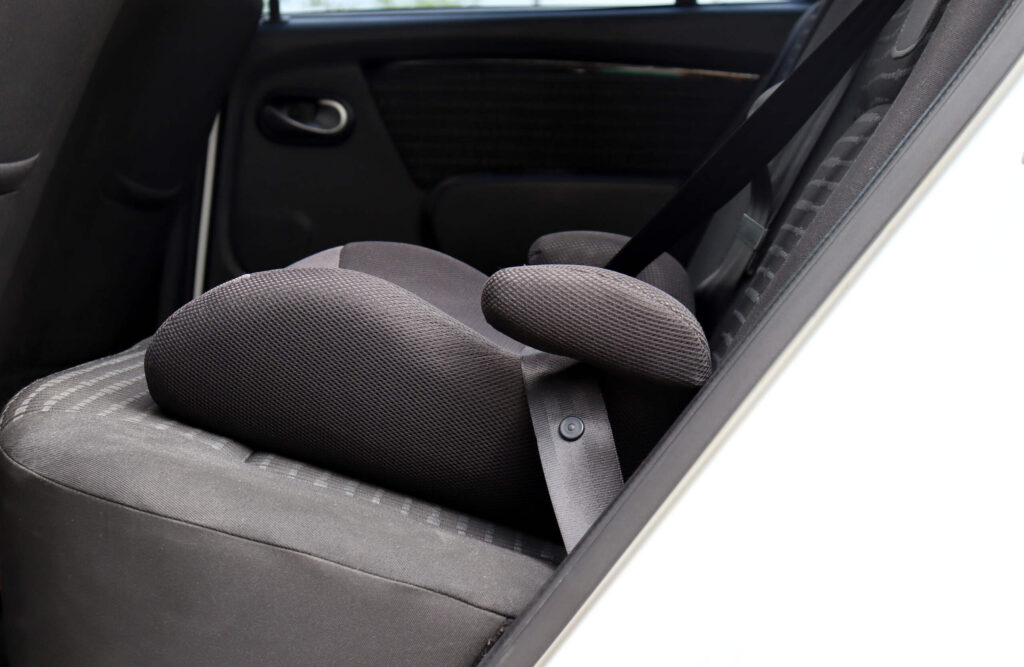
Florida law requires children through age 3 to ride in a separate carrier or integrated child seat, and children ages 4 and 5 to ride in a carrier, integrated seat, or booster seat. Safety guidance recommends boosters longer.
The Essentials
These are the core points of Florida's child restraint law:
- Florida requires a separate carrier or integrated child seat for children through age 3.
- Children ages 4 and 5 must use a carrier, integrated seat, or booster seat, with limited exceptions.
- Florida has no statute setting a minimum age to ride in the front seat.
- A child restraint violation is a moving violation that can add points to a driver's license.
- Florida law limits the use of a child restraint violation as evidence of comparative negligence in a civil case.
What Do Florida Car Seat Laws Require?
Florida car seat laws require every driver to secure children 5 and younger in a federally approved child restraint device under section 316.613. The type of restraint depends on the child's age.
Children Through Age 3
Children through age 3 must ride in a separate carrier or a vehicle manufacturer's integrated child seat. A booster seat does not satisfy the law for this age group.
Children Ages 4 and 5
Children ages 4 and 5 must ride in a separate carrier, an integrated child seat, or a child booster seat. Once a child turns 6, Florida law allows an adult seat belt, even though many children still do not fit one properly.
Exceptions in the Statute
For children ages 4 and 5, the law allows a seat belt instead of a booster in narrow situations:
- When the child is transported gratuitously by a driver who is not a member of the child's immediate family
- When the child has a medical condition documented by a physician that requires an exception
- During a medical emergency involving the child
These exceptions do not apply to children 3 and younger.
Florida Law vs. Safety Recommendations by Age
Florida's legal minimum and national safety guidance from the National Highway Traffic Safety Administration (NHTSA) and the American Academy of Pediatrics (AAP) differ. This table separates them clearly:
| Stage | Florida legal requirement | Best-practice recommendation (NHTSA/AAP) |
|---|---|---|
| Rear-facing seat | Not specifically required by age; a carrier or integrated seat is required through age 3 | Rear-facing as long as possible, until the seat's height or weight limit |
| Forward-facing harness | Satisfies the law through age 5 | Use until the child outgrows the harness limits |
| Booster seat | Allowed for ages 4 and 5; not required at 6 and older | Use until the seat belt fits, often around 4 feet 9 inches and between ages 8 and 12 |
| Adult seat belt | Permitted from age 6 | Only after passing the five-step fit test |
| Front seat | No statutory age | Back seat through age 12 |
Following the law keeps you from a citation, while following the recommendations gives your child the most protection.
How Do You Know When a Child Can Stop Using a Booster Seat?
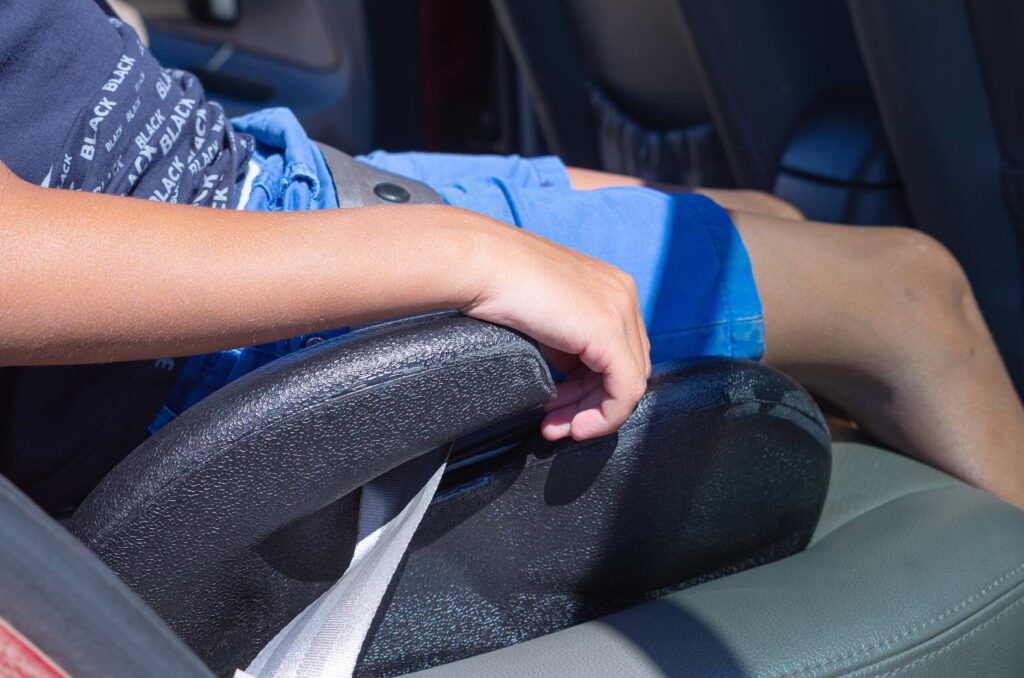
A child is generally ready to stop using a booster seat when an adult seat belt fits correctly without it. Age alone is a poor guide, so many parents use a five-step fit test:
- The child sits all the way back against the vehicle seat.
- The child's knees bend comfortably at the edge of the seat.
- The lap belt sits low across the upper thighs, not the stomach.
- The shoulder belt crosses the middle of the shoulder and chest, not the neck.
- The child can stay seated this way for the entire trip.
If any step fails, the booster seat is still doing important work, even if Florida law no longer requires it.
Can a Child Sit in the Front Seat in Florida?
Florida does not have a statute that sets a minimum age for riding in the front seat. NHTSA recommends that children 12 and younger ride in the back seat, because front passenger airbags deploy with enough force to seriously injure a child. This is a safety recommendation, not a legal requirement.
Rear-Facing Seats and Airbags
A rear-facing car seat should never be placed in front of an active passenger airbag. Most vehicle manuals include a warning label about this on the sun visor.
What Is the Penalty for Violating Florida Car Seat Laws?
A violation of Florida's child restraint law is a moving violation, and moving violations generally add points to the driver's license and carry a fine set by statute and local court costs. In some courts, a driver may be able to complete a child restraint safety program instead of paying the penalty, so checking with the court that issued the citation is worthwhile.
Car Seat Installation, Inspection, and Replacement
Many car seats are installed with small errors that reduce protection. Common mistakes include a loose base, a harness that is too loose, a chest clip set too low, and an unused top tether on a forward-facing seat.
LATCH vs. Seat Belt Installation
Seats can be installed with the vehicle's lower anchors and tethers (LATCH) or with the seat belt. Both methods are safe when done correctly, but LATCH has weight limits listed by the seat manufacturer, after which the seat belt is used.
Free Inspections in Tampa Bay
Certified Child Passenger Safety Technicians check installations for free at many fire stations, hospitals, and community events in Pinellas, Hillsborough, and Pasco counties. NHTSA's car seat inspection locator on its car seat page can help you find a nearby station.
Replacing a Seat After a Crash
NHTSA recommends replacing a car seat after a moderate or severe crash. Car seats also have expiration dates printed on a label or molded into the shell. When another driver caused the crash, the cost of a replacement seat is generally part of the property damage claim.
Does a Car Seat Violation Affect an Injury Claim in Florida?
A car seat violation does not bar a family from recovering damages when another driver caused the crash. Section 316.613 provides that a failure to use a child restraint is not to be considered comparative negligence and is not admissible as evidence in a civil trial for damages, which protects families from one of the most common insurer arguments.
Adult seat belt use is treated differently. Under section 316.614, an adult's failure to wear a seat belt may be considered as evidence of comparative negligence. Under section 768.81, an injured person more than 50% at fault recovers nothing, which makes the distinction important for parents riding with their children.
Florida Car Seat Law Questions Answered by Our Tampa Bay Attorneys
Do Florida car seat laws apply in taxis and rideshares?
Florida's child restraint statute applies to drivers of motor vehicles operated on Florida roads, so parents using rideshares should plan to bring a seat. Rideshare companies may offer car seat options in some markets, but availability varies.
Do grandparents have to follow Florida's booster seat law?
Grandparents and other immediate family members must follow Florida's booster seat requirement for children ages 4 and 5. The exception for drivers transporting a child gratuitously applies only to drivers who are not members of the child's immediate family.
Can I use a car seat bought in another country?
Florida requires a federally approved child restraint, so seats certified only to foreign standards may not satisfy the law. Labels on U.S.-approved seats state compliance with federal motor vehicle safety standards.
Who pays for my child's medical care after a Florida crash?
A child hurt in a Florida crash is often covered first by the personal injury protection (PIP) on the family's own auto policy, then by health insurance. Claims against the at-fault driver may cover remaining costs depending on the injuries.
Is a used car seat safe to buy?
A used car seat may be unsafe if its crash history is unknown, it is past its expiration date, or it is missing labels or parts. NHTSA advises checking for recalls before using any seat.
When the Ride Home Ended With a Crash
No parent expects to need these answers after a collision, and a child's injury changes everything about the weeks that follow. Roman Austin helps families across Tampa Bay, and our Clearwater car accident attorneys and the team handling Tampa car accident claims can explain where your family stands.
You can also browse our Florida accident resources or call (727) 787-2500, any time, for a free consultation.

Mark S. Roman
Board Certified Civil Trial Attorney and Founder
Mark S. Roman is the founder of Roman Austin Car Accident and Personal Injury Lawyers and a Board Certified Civil Trial Lawyer, a credential held by fewer than 2% of Florida attorneys. A Tampa Bay native, he has practiced throughout Florida since 1986 and founded the firm in 1996 to represent injured people in his hometown.
He earned a B.S. in Journalism from the University of Florida in 1981 and his J.D. from Florida State University College of Law in 1986. Mark is AV Rated by Martindale-Hubbell, holds a perfect 10 AVVO rating, and belongs to the Multi-Million Dollar Advocates Forum. He has served on the Florida Bar Grievance Committee for both Pinellas and Pasco counties, chairing the Pasco committee.
Author's Bio

