Your car likely knows how fast it was going a few seconds before the crash, whether the brakes were pressed, and whether you were buckled in. That information lives in a car black box event data recorder (EDR), and it can settle an argument about fault that witnesses never could. It can also vanish the moment the car is repaired, sold, or crushed.
Drivers search this topic for two reasons: they worry about privacy, or they need proof after a crash. Both concerns have clear answers under federal and Florida law. If you were hurt in a crash and the other driver disputes what happened, a Florida car accident attorney can review your situation for free and explain whether vehicle data could help your claim.
Does my car have a black box event data recorder?
Your car almost certainly has a black box if it is a recent model, because nearly all new passenger vehicles sold in the U.S. have an event data recorder that saves a few seconds of speed, braking, and seat belt data around a crash.
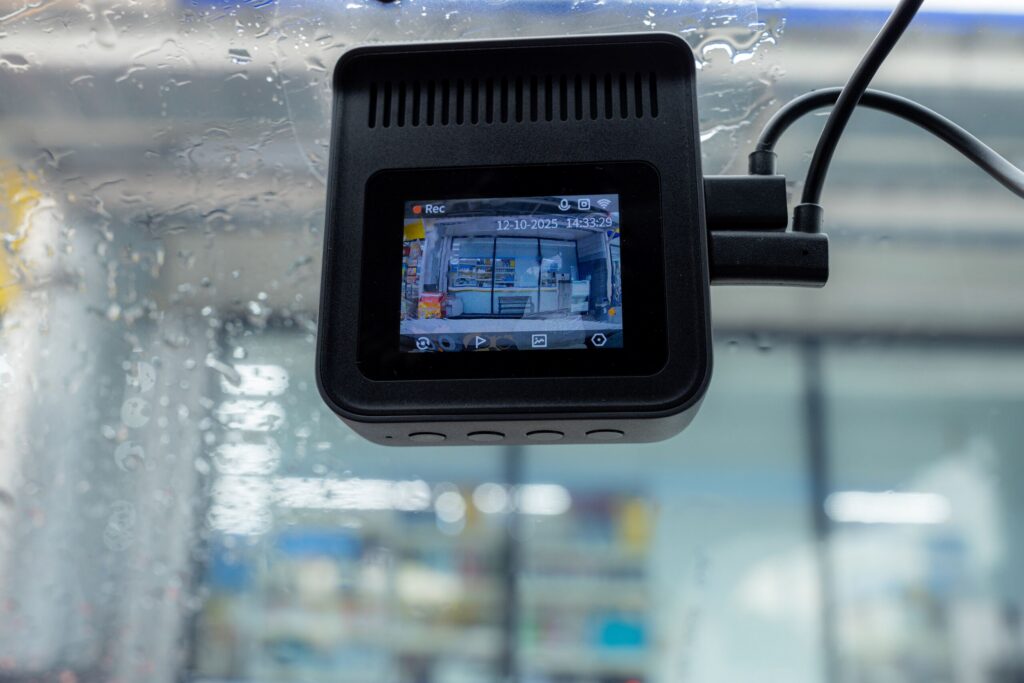
The Short Version
These points summarize what drivers most need to know about vehicle black boxes:
- An event data recorder captures a short window of vehicle data around a crash, not a continuous record of driving.
- Federal rules set standards for what EDRs record when manufacturers install them.
- Under federal law, EDR data belongs to the vehicle's owner or lessee, with limited exceptions.
- EDR data can be lost once a vehicle is repaired, salvaged, or destroyed.
- EDR evidence can help rebut comparative fault arguments in Florida injury claims.
What Is a Car Black Box Event Data Recorder?
A car event data recorder is a function built into a vehicle's electronics that saves technical data when it senses a crash or near-crash. In most passenger vehicles, it lives inside the airbag control module, usually under the center console or a front seat.
Why "Black Box" Overstates It
"Black box" is borrowed from aviation, where flight recorders capture long stretches of flight data and cockpit audio. A car's EDR is far more limited. It records seconds of data tied to a triggering event, then stores that snapshot until it is overwritten or downloaded.
EDRs vs. Commercial Truck Data
Commercial trucks often carry engine control modules and telematics systems that record far more, such as hours of operation, speed history, and hard-braking events. Those systems matter in commercial truck accident cases, where federal trucking rules add more records to request.
What Does an Event Data Recorder Record?
An event data recorder typically records vehicle speed, accelerator and brake use, seat belt status, and airbag deployment for a few seconds before and during a crash. Federal standards in 49 CFR Part 563 list required data elements and how they must be captured.
| Data point | What it can show in a claim |
|---|---|
| Pre-crash vehicle speed | Whether a driver was speeding |
| Accelerator position and engine RPM | Whether a driver was speeding up or easing off |
| Service brake on or off | Whether and when a driver braked |
| Steering input (on many vehicles) | Whether a driver tried to swerve |
| Seat belt status | Whether occupants were buckled |
| Delta-V and airbag timing | How severe the impact was |
How Long Is the Recording Window?
Most current EDRs store about five seconds of pre-crash data. A December 2024 federal rule extends the required pre-crash recording period to 20 seconds and increases the sampling rate for vehicles phased in over the coming model years. Either way, the record covers seconds, not hours.
Which Vehicles Have a Black Box?
Most passenger vehicles built in roughly the last 15 years have an event data recorder. Federal law does not require manufacturers to install one, but since the 2013 model year any EDR a manufacturer does install in a light vehicle must meet Part 563 standards, and nearly every automaker now includes one.
How to Check Your Own Car
Your owner's manual usually discloses whether the vehicle has an EDR, because Part 563 requires manufacturers to include a statement when one is installed. The National Highway Traffic Safety Administration (NHTSA) also publishes background on how EDRs work.
Who Owns Car Black Box Data in Florida?
The owner or lessee of the vehicle owns the EDR data under the federal Driver Privacy Act of 2015. Anyone else generally needs the owner's consent, a court order, or another exception in the law, such as certain safety research or emergency medical response, to retrieve it.
Can Police Download It Without a Warrant?
A Florida appellate court held in State v. Worsham (Fla. 4th DCA 2017) that police generally need a warrant to download EDR data absent an exception. That case addressed criminal searches, and civil claims typically reach the data through consent, preservation agreements, or discovery.
What EDRs Do Not Record
Event data recorders in passenger cars do not record audio, video, or conversations, and a standard EDR is not a GPS tracker. Some vehicles have separate connected services or telematics that store location data, which follow different rules and privacy policies.
How EDR Data Is Retrieved After a Crash
EDR data is usually retrieved with the Bosch Crash Data Retrieval (CDR) system or a manufacturer-specific tool. A trained technician or crash reconstructionist connects to the vehicle or removes the module and creates a report. The process typically requires physical access to the car, which is why the vehicle itself must be preserved.
Common steps in preserving black box evidence include:
- Identifying where each vehicle is being stored, such as a tow yard or body shop.
- Sending a preservation (spoliation) letter to owners and insurers.
- Arranging a download by a qualified technician, often with both sides present.
- Having a reconstructionist interpret the report alongside photos and scene measurements.
Insurers may move quickly to total and auction a vehicle, so the earlier these steps begin, the better the chance the data survives.
How Does Black Box Data Affect a Florida Injury Claim?
Black box data can prove or disprove speed, braking, and seat belt use, which often decides how fault is divided. Under section 768.81, an injured person more than 50% at fault recovers nothing, so objective data can be the difference between a claim and no claim.
Rebutting a Comparative Fault Argument
Suppose the other driver claims you were speeding through a Clearwater intersection. If your car's EDR shows you were under the limit and braking, that record carries weight that competing memories do not. EDR data is one piece of evidence and is usually interpreted alongside photos, video, and scene measurements.
Car Black Box and Event Data Recorder Questions Answered by Our Florida Attorneys
Can the insurance company get my black box data without asking me?
An insurance company generally needs the vehicle owner's consent or a court order to access black box data under the federal Driver Privacy Act. Some policies or claim forms include consent language, so reading what you sign after a Florida crash matters.
How long does black box data last after a crash?
Black box data from a crash with airbag deployment is often locked and stored until downloaded, while data from a lower-severity event may be overwritten by a later event or by continued driving. The safest assumption is that the data is at risk until it is preserved.
Can I get the other driver's black box data?
You can often obtain the other driver's black box data in a Florida injury case through the owner's consent, a preservation agreement, or a court order during litigation. A preservation letter sent early helps keep the vehicle available for download.
What if my car was already totaled and sold?
A totaled car sold at salvage auction may still be traceable through the insurer, the tow company, or the auction house, and the module can sometimes be recovered. Once a vehicle is crushed, the data is generally gone.
Can black box data be used against me?
Black box data can hurt a Florida injury claim if it shows the claimant was speeding or unbelted, because insurers may use it to argue comparative fault. Knowing what the data shows before negotiating helps an attorney prepare for that argument.
When the Data Can Speak for You
Some crashes come down to one driver's word against another's, and a few seconds of vehicle data can change that conversation. At Roman Austin, our Clearwater car accident lawyers and our team handling St. Petersburg car accident claims know how to locate and preserve that evidence. Call (727) 787-2500, any time, for a free consultation.

John C. Austin
Partner and Trial Attorney
John C. Austin spent twelve years defending insurance companies, first at a Florida defense firm and then in-house at State Farm, before turning that experience toward injured clients. He holds the CPCU designation, earned by fewer than 4% of the insurance industry. A St. Petersburg native and University of Florida law graduate, he has handled thousands of personal injury claims and tried cases to verdict as first chair.
Author's Bio

