

Roman Austin | March 20, 2026 | Child Injuries
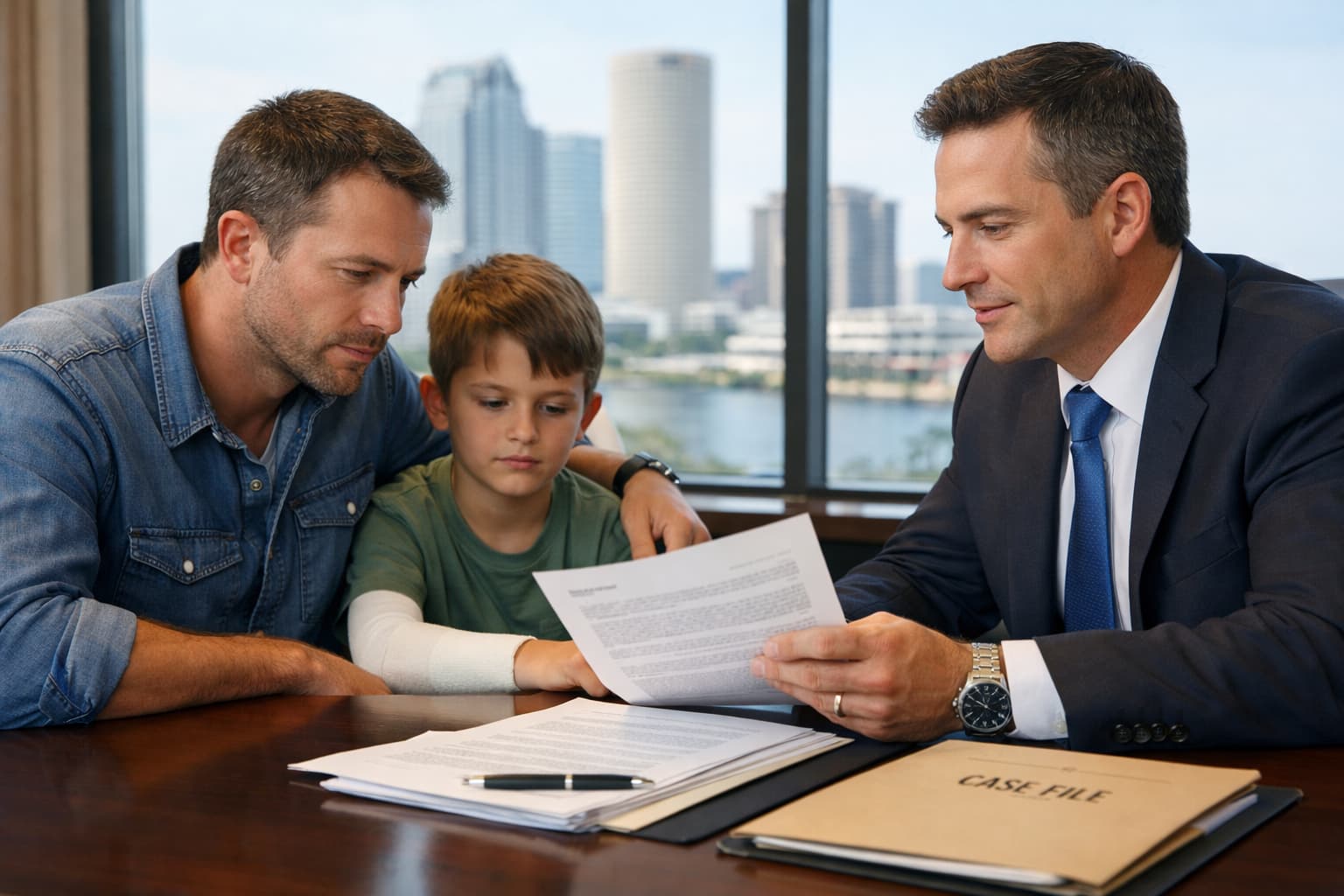
When a child is injured due to someone else’s negligence, the legal process is different from an adult injury claim. Florida has specific rules about who may file on behalf of a minor, how long the filing window lasts, and what extra legal protections apply when children are injured on someone else’s property.
Many Tampa parents do not realize that child injury cases follow different procedures and, in limited situations, may remain viable even years after the injury. Filing deadlines are strictly enforced, but the law allows limited extensions in certain situations. Understanding how these cases work is an important first step in protecting your child’s rights.
Key Takeaways About Filing a Child Injury Lawsuit in Florida
- A minor cannot file a personal injury lawsuit independently in Florida. In most cases, a parent or legal guardian files the claim on the child’s behalf. A guardian ad litem may be appointed by the court when necessary, such as in situations involving a potential conflict of interest.
- The standard two-year statute of limitations under Florida Statute 95.11 generally applies, but Florida Statute 95.051(1)(i) may toll the deadline in specific circumstances involving the absence or incapacity of a parent or guardian, with a seven-year maximum.
- The attractive nuisance doctrine in Florida modifies the limited duty typically owed to trespassers and may allow liability when specific conditions are met.
- Parents who file on behalf of their child may also pursue separate claims for medical expenses and loss of the child’s services.
Who Has Legal Standing to File a Minor Personal Injury Claim in Tampa?
Florida law does not allow a child under the age of 18 to file a personal injury lawsuit on their own. A parent or legal guardian typically brings the claim on the child’s behalf. In certain situations, the court may appoint a guardian ad litem to represent the child’s interests.
How a Parent or Guardian Files for an Injured Child
The parent or guardian acts as the next friend of the child and files the lawsuit in the child’s name. The claim belongs to the child, not the parent. In some cases involving minors, a judge must approve the settlement, particularly when the recovery exceeds statutory thresholds or when a guardian has not been formally appointed.
Filing a claim for a minor differs from filing an adult personal injury case in several important ways:
- The lawsuit is typically filed in the child’s name by a parent or guardian acting as next friend, establishing their authority to act on the child’s behalf
- Settlement proceeds belong to the child, and when court approval is required, the court may supervise how the funds are managed
- The court may require that settlement funds be placed in a trust or structured settlement until the child reaches adulthood
- If the parent has a conflict of interest with the child’s claim, the court may appoint a separate guardian ad litem to represent the child
These rules exist to protect a child’s financial and legal interests. Florida courts also take an active role in reviewing personal injury settlements involving minors. If a settlement exceeds a certain amount, the court may require:
- A hearing to review the fairness of the settlement terms
- Appointment of a guardian ad litem to represent the child’s interests independently
- A structured payout plan or trust to protect the funds until the child reaches adulthood
- When court approval of a minor’s settlement is required, the court reviews the proposed attorney’s fees and costs as part of that approval process
These protections exist because a child cannot legally evaluate or approve a settlement. The court helps make sure the child’s interests are not overlooked or undervalued.
Parents’ Separate Claims in a Child Injury Case
Parents can also bring their own claims in addition to the child’s lawsuit. These claims generally seek reimbursement for medical expenses the parent paid on the child’s behalf, loss of the child’s services during minority, and certain out-of-pocket costs directly related to the injury. Unlike the child’s claim, a parent’s claim is subject to the standard two-year statute of limitations and is not tolled during the child’s minority.
What Is the Statute of Limitations for a Child Injury Lawsuit in Florida?
The filing deadline for a child injury case in Florida depends on the specific circumstances of the claim and who is filing. Under Florida Statute 95.11, the standard statute of limitations for a negligence-based personal injury claim is two years from the date of injury.
When Tolling May Extend the Filing Deadline for a Minor
Florida Statute § 95.051 lists specific and limited circumstances under which the statute of limitations may be tolled. Courts apply tolling rules narrowly, and they only apply when the law’s specific requirements are met.
This law does not automatically extend the deadline in every case involving a child’s injury. The extension applies only in limited situations. In some types of cases, Florida law sets a maximum deadline of seven years from the date of the incident.
Tolling applies only if certain legal conditions are met:
- The child must lack a parent, guardian, or guardian ad litem who is able and willing to file on their behalf
- The parent or guardian must have an interest adverse to the child, such as when the parent is the one who caused or contributed to the injury
- The parent or guardian must have been adjudicated incapacitated by a court
- Even if tolling applies, Florida law may still set a final deadline
Many parents assume the statute of limitations automatically pauses until their child turns 18, but that is not the case in most Florida personal injury claims. If a parent or guardian is available and able to file, the standard two-year deadline typically applies. Acting sooner rather than later protects both the child’s claim and the parents’ separate claims.
How Does the Attractive Nuisance Doctrine Protect Children in Florida?
The attractive nuisance doctrine is an exception to the usual rule that property owners owe limited duties to trespassers and may allow liability under specific circumstances when a dangerous condition on the property is likely to attract children.
Under Florida Statute 768.075(3)(c), the law that covers trespasser injuries keeps the attractive nuisance doctrine in place. This means property owners may face liability when a child trespasses onto their property and is injured by a dangerous condition that attracted the child there.
What Counts as an Attractive Nuisance in Tampa
Tampa’s warm climate, outdoor living culture, and dense residential neighborhoods create conditions where attractive nuisance hazards are common. Florida courts have recognized that young children lack the maturity to appreciate the dangers posed by certain features on someone else’s property.
Conditions that frequently give rise to attractive nuisance claims in the Tampa area include:
- Unfenced or inadequately secured swimming pools and hot tubs
- Trampolines without safety enclosures or warning barriers
- Abandoned appliances such as refrigerators and freezers with doors still attached, which Florida Statute § 823.08 addresses by requiring removal of doors to reduce the risk of harm to children
- Construction sites with exposed equipment, open pits, or materials accessible to children
- Abandoned vehicles or machinery on residential or commercial lots
For the attractive nuisance doctrine to apply, the property owner must have known or had reason to know that children were likely to trespass, and the dangerous condition must create a serious risk for children who are too young to understand the danger. The property owner must also have failed to take reasonable steps to eliminate or secure the hazard.
What Types of Injuries Lead to Child Injury Claims in the Tampa Area?
Children face injury risks in settings that do not typically affect adults in the same way. Their smaller size, developing bodies, and limited awareness of danger make them more vulnerable to certain types of accidents throughout Hillsborough County.
Common Scenarios Behind Minor Personal Injury Claims in Tampa
Car accidents remain one of the most frequent causes of child injuries in the Tampa area, whether the child is a passenger, a pedestrian near a school zone, or a cyclist on a neighborhood street. Slip and fall accidents at retail stores, restaurants, and playgrounds also generate claims when property owners fail to maintain safe conditions.
Other situations that frequently lead to child injury claims in Tampa include:
- Drowning or near-drowning incidents in residential pools, community pools, or water features
- Dog bites and animal attacks, particularly at homes where the owner fails to secure the animal
- Injuries at daycare facilities, summer camps, or recreational programs due to inadequate supervision
- Bicycle accidents involving motorists who fail to yield or maintain safe passing distance
Because a child’s injuries can affect physical growth, learning, and emotional health over time, the damages in a child injury case may extend well beyond immediate medical costs. Future medical treatment, therapy, lost educational opportunity, and reduced earning capacity may all factor into the total value of a minor’s claim.
How Does Roman Austin Help Families With a Child Injury Lawsuit in Florida
When a child is hurt in an accident, parents face medical decisions, emotional stress, and legal questions all at once. Roman Austin Car Accident and Personal Injury Lawyers handles car accident and personal injury cases, including minor personal injury claims in the Tampa area and throughout Hillsborough County.
The Tampa Office
The firm’s Tampa office is located at 401 E. Jackson Street, Suite 3319, Tampa, FL 33602, in downtown Tampa near the Hillsborough County Courthouse. That proximity gives the legal team familiarity with the local courts that handle child injury and premises liability claims in the area.
Free Consultations for Tampa Families
Roman Austin offers free consultations 24 hours a day, 7 days a week. You may reach out at any time to discuss your child’s injury, ask questions about the legal process for filing on behalf of a minor, and learn what your family’s options might include. There is no cost and no obligation.
FAQs for Child Injury Lawsuit Florida
Who files a personal injury lawsuit for a child in Florida?
A parent, legal guardian, or court-appointed guardian ad litem must file the lawsuit on behalf of the minor. The child does not have legal standing to file on their own.
Does the statute of limitations pause until a child turns 18 in Florida?
Not automatically. Tolling under Florida Statute 95.051(1)(i) only applies in narrow circumstances, such as when no parent or guardian exists or when the guardian has an adverse interest. In most cases where a parent is available and able to file, the standard two-year deadline applies.
What is the attractive nuisance doctrine in Florida?
The attractive nuisance doctrine holds property owners to a higher duty of care when a dangerous condition on their property is likely to attract children. Under Florida Statute 768.075(3)(c), the doctrine applies even when the child was trespassing, provided the property owner knew or had reason to know that children were likely to access the area.
Do courts have to approve a child’s personal injury settlement in Florida?
Florida courts review many settlements involving minors, particularly when the net recovery exceeds statutory limits or when court supervision is required. The court may require a hearing, appoint a guardian ad litem, and approve the terms before any funds are distributed.
What types of accidents lead to child injury claims in Tampa?
Car accidents, swimming pool incidents, slip and falls, dog bites, and injuries at daycare or recreational facilities are among the most common sources of child injury claims in the Tampa area.
Protect Your Child’s Legal Rights After an Injury in Florida
Delaying action can make it harder to gather evidence, locate witnesses, and comply with filing deadlines. While Florida law may provide limited tolling in specific circumstances, most parents face the same two-year statute of limitations that applies to adult claims.
Evidence from the scene, medical records, and witness recollections all become less reliable over time. Deadlines and lost evidence can weaken a claim, so acting quickly helps protect your legal rights.
If your child was hurt because of someone else’s negligence in Tampa or Hillsborough County, reach out to Roman Austin Car Accident and Personal Injury Lawyers for a free consultation to learn what your family’s options might look like.


