

Roman Austin | March 20, 2026 | Personal Injury
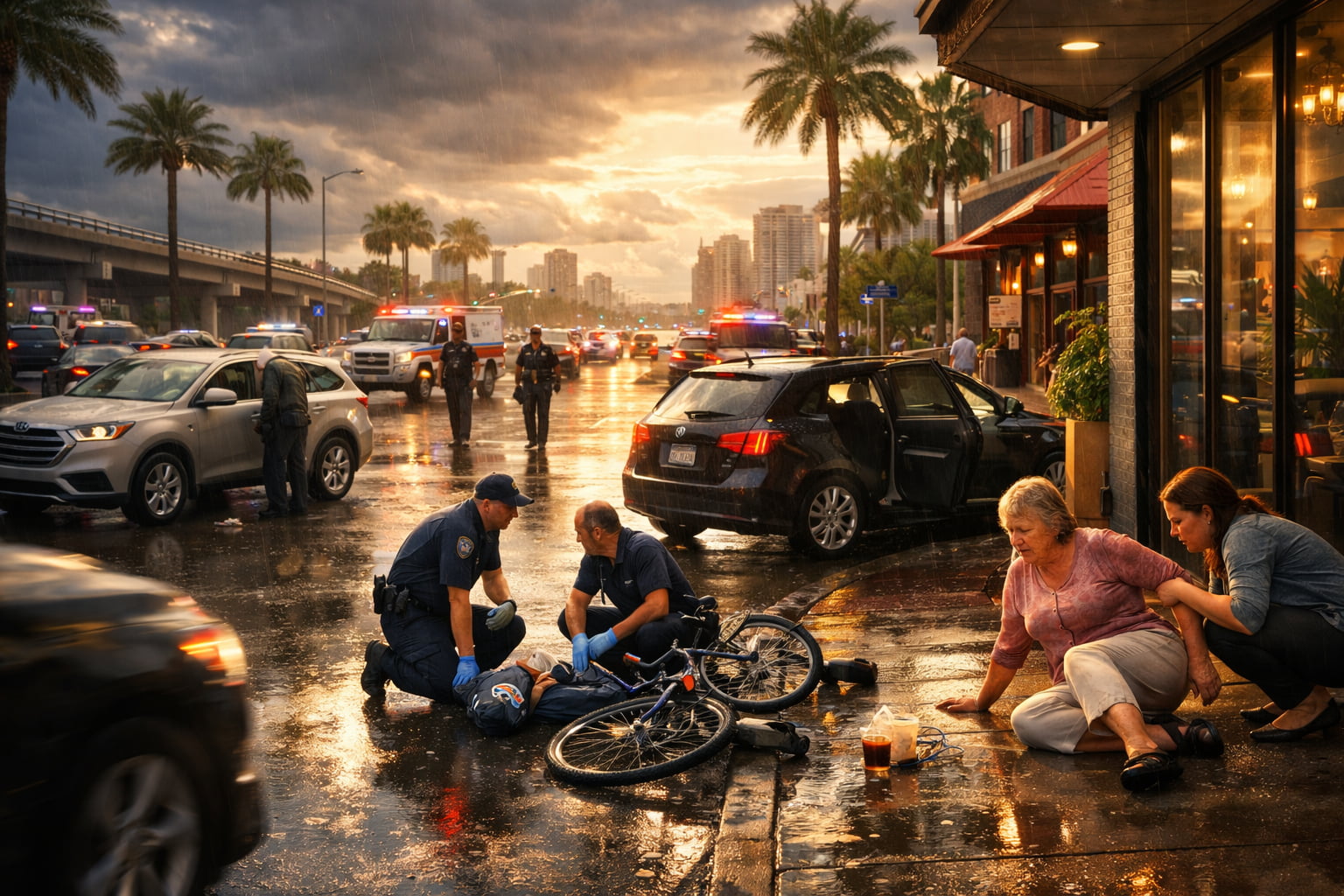
Each year, the common personal injury accidents St. Petersburg Florida residents experience, including car crashes, bicycle collisions, and slip and fall incidents, result in injuries that require medical care and time away from work. What may begin as an ordinary drive, bike ride, or visit to a local business can lead to mounting expenses and questions about what Florida law allows you to pursue.
Located between Tampa Bay and the Gulf, St. Petersburg has heavily traveled roadways where drivers, cyclists, and pedestrians compete for limited space. Tourism, seasonal traffic increases, sudden rainstorms, and a large retiree population throughout Pinellas County all contribute to recurring accident patterns across the city.
Understanding how these local conditions intersect with Florida personal injury law can help you evaluate your options and decide what steps to take next.
Key Takeaways About Common Personal Injury Accidents in St. Petersburg, Florida
- Car accidents remain the leading source of personal injury claims in St. Petersburg, with congestion along I-275, US-19, and local arterials creating frequent collision points.
- Bicycle accidents in St. Pete often occurs when motorists fail to yield or pass without providing the three feet of clearance required by Florida law.
- Slip and fall injuries in Pinellas County carry a specific legal burden under Florida Statute 768.0755, requiring proof that the property owner knew or had reason to know about the hazard.
- Florida’s two-year statute of limitations for negligence-based personal injury claims means the window to take legal action is shorter than many people realize.
- Modified comparative negligence rules now bar recovery if you are found more than 50 percent at fault for your own injuries.
Why Are Car Accidents the Most Common Personal Injury in St. Petersburg, FL
Motor vehicle crashes typically represent the largest category of injury claims in Pinellas County. I-275 carries heavy commuter traffic through the city, US-19 remains one of the region’s most collision-prone corridors, and major local roads such as 4th Street N, Central Avenue, and 34th Street S experience constant turning movements and congestion.
Several conditions increase collision risk across the area:
- Heavy seasonal tourism traffic from visitors unfamiliar with local roads
- Afternoon rain storms that reduce visibility and create slick surfaces within minutes
- Aging infrastructure where signal timing and road markings have not kept pace with growth
- A high proportion of older drivers in Pinellas County who may face challenges with reaction time
- Distracted driving by motorists navigating GPS directions on unfamiliar routes
These overlapping factors explain why motor vehicle crashes remain so frequent throughout the St. Petersburg area.
What Florida Law Says About Car Accident Fault
Florida applies a modified comparative negligence standard under Florida Statute 768.81. If you are found more than 50 percent responsible for your injuries, you cannot recover damages.
This rule took effect in March 2023, replacing the state’s former pure comparative negligence system. Because recovery is unavailable above the 50 percent threshold, insurance carriers may closely examine fault determinations. Preserving evidence early can help reduce the risk of an inflated percentage of responsibility.
Injuries Commonly Linked to St. Petersburg Car Crashes
The severity of car accident injuries varies by crash speed, vehicle type, and point of impact. Some of the most frequently reported injuries include:
- Whiplash and soft tissue injuries that may not produce symptoms for hours or days after the collision
- Broken bones in the arms, legs, ribs, and pelvis from side-impact and T-bone crashes
- Traumatic brain injuries ranging from mild concussions to severe closed-head trauma
- Spinal cord damage that may lead to partial or full paralysis
- Internal organ injuries from seatbelt compression or blunt force during high-speed collisions
These injuries often require extended treatment, rehabilitation, and time away from work — costs that can exceed initial insurance settlement offers by a substantial margin.
What Makes Bicycle Accidents in St. Pete So Dangerous
St. Petersburg’s flat terrain and mild climate make it a popular cycling city. The Pinellas Trail connects to downtown St. Pete, and many residents bike through neighborhoods near the waterfront, the Warehouse Arts District, and Central Avenue.
Under Florida Statute 316.2065, bicycles are legally classified as vehicles with the same rights and duties as motor vehicles. The Florida Department of Highway Safety and Motor Vehicles requires drivers to give cyclists a minimum of three feet of clearance when passing.
Despite these protections, common causes of bicycle crashes in Pinellas County include:
- Motorists turning right across a bike lane without checking for approaching cyclists
- Drivers opening car doors into the path of a passing rider
- Failure to yield at intersections along corridors like 1st Avenue N and 4th Street
- Poor road conditions including potholes and faded lane markings that force cyclists into traffic
- Distracted driving that leaves motorists unaware of a nearby cyclist
Riders lack the structural protection of a car, so head injuries, broken bones, and road rash are common even at low speeds. Pedestrian accidents in downtown St. Pete follow a similar pattern, particularly near the St. Pete Pier, Beach Drive, and Central Avenue. The FDOT Pedestrian and Bicycle Strategic Safety Plan identifies Pinellas County as one of Florida’s highest-ranking counties for pedestrian and bicycle crashes.
Where Do Slip and Fall Accidents Happen Most in Pinellas County
Slip and fall accidents in Pinellas County are a leading category of premises liability claims. Falls frequently result in fractures, spinal injuries, traumatic brain injuries, and chronic pain that lasts months or longer. High-risk locations in St. Petersburg include:
- Grocery stores and retail shops where spilled liquids sit on floors without warning signs
- Restaurant and bar patios along Beach Drive and Central Avenue with rain, spills, and uneven surfaces
- Hotel lobbies and pool decks where wet floors and poor drainage go unaddressed
- Parking lots and garages with cracked pavement, oil stains, or poor lighting
- Public sidewalks near the waterfront where tree roots, broken concrete, and standing water create tripping hazards
Under Florida Statute 768.0755, if you fall on a transitory foreign substance in a business, you must prove the business had actual or constructive knowledge of the dangerous condition and failed to fix it. Constructive knowledge means the hazard existed long enough for the business to have discovered it, or occurred with enough regularity to be foreseeable.
Photographs, surveillance timestamps, witness statements, and written incident reports created immediately after a fall can significantly strengthen proof of constructive knowledge.
How Does Florida’s Statute of Limitations Affect Personal Injury Claims in St. Petersburg
In Florida, you generally have two years from the date you were injured to file a negligence-based personal injury lawsuit. This deadline is set by Florida Statute § 95.11(4)(a).
In 2023, House Bill 837 changed the law and reduced the time limit from four years to two years. The new two-year deadline took effect on March 24, 2023.
If you do not file your lawsuit within the required time, the court can dismiss your case, and you may lose your right to recover compensation.
Why the Deadline Matters More Than You Think
Two years may sound like plenty of time, but gathering medical records, obtaining police reports, collecting witness statements, and negotiating with insurance companies all eat into that window.
Certain exceptions may apply if the injury was not immediately apparent, or if the injured person is a minor or legally incapacitated, but these exceptions are narrow and risky to rely on without legal guidance.
What Steps May Strengthen Your Personal Injury Claim After a St. Petersburg Accident
Once you are home and safe, write down everything you remember while details are fresh. Save photos, police reports, medical records, and receipts for injury-related expenses. Follow up with a medical professional even if injuries seem minor, because soft tissue damage and concussions may not show full symptoms for days.
Why You May Want a Lawyer Before Speaking With Insurance
Insurance carriers begin evaluating claims immediately after an accident is reported, and early recorded statements can affect how liability and damages are assessed. A personal injury claim in Florida may cover several types of compensation:
- Medical expenses including emergency care, surgery, physical therapy, and ongoing treatment
- Lost income and reduced earning capacity during and after recovery
- Pain and suffering for physical discomfort and daily life impact
- Property damage to your vehicle, bicycle, or personal belongings
- Out-of-pocket costs such as transportation to appointments or assistive devices
No two cases produce identical results, which is why a case-by-case evaluation from a qualified attorney matters.
How Does Roman Austin Help With Personal Injury Accidents in St. Petersburg
When an accident results in serious injury, having clear legal guidance can make it easier to understand your rights and options. At Roman Austin Car Accident and Personal Injury Lawyers, we represent individuals involved in car accidents, bicycle accidents, and slip and fall incidents throughout St. Petersburg and the greater Pinellas County area.
Conveniently Located on Beach Drive
Our office is located at 840 Beach Dr. NE, Suite 202, St. Petersburg, FL 33701. Our presence in the community gives us in-depth knowledge of the roads, intersections, and commercial corridors where accidents commonly occur, enabling us to provide informed, locally grounded representation in handling claims.
Free Consultations Available 24/7
We offer complimentary consultations 24 hours a day, seven days a week. During this time, we help injured individuals better understand how Florida law may apply to their situation and discuss potential next steps.
FAQs for Common Personal Injury Accidents St. Petersburg Florida
What type of accident leads to the most personal injury claims in St. Petersburg?
Car accidents account for the highest number of personal injury claims in the area. Heavy traffic on I-275, US-19, and major local roads, combined with commuter flow and tourism, contributes to frequent collisions.
How long do I have to file a personal injury lawsuit in Florida?
Florida law generally provides two years from the date of injury to file a negligence-based personal injury lawsuit. This deadline was established under House Bill 837, which took effect on March 24, 2023.
What must be proven in a Florida slip and fall case?
Under Florida Statute 768.0755, an injured person must show that a business had actual or constructive knowledge of a dangerous condition and failed to correct it. Constructive knowledge may be established if the condition existed long enough that it should have been discovered or occurred regularly enough to be foreseeable.
Does Florida’s comparative negligence rule affect my claim?
Yes. Florida follows a modified comparative negligence system under Florida Statute 768.81. If you are found more than 50 percent at fault for your injuries, you cannot recover damages. If you are 50 percent or less at fault, your compensation is reduced by your percentage of responsibility.
Do cyclists have the same legal rights as drivers in Florida?
Yes. Florida Statute 316.2065 classifies bicycles as vehicles. Cyclists have the same rights and duties as motor vehicle operators, and drivers must provide at least three feet of clearance when passing.
Take Action on Your Common Personal Injury Accident Claim in St. Petersburg, Florida
Acting promptly after an accident can protect both your health and your claim. As time passes, evidence can be lost, witnesses may become harder to locate, and records may be more difficult to secure.
In most cases, Florida law gives you two years to file a personal injury lawsuit. If that deadline passes, you may lose the right to seek compensation. Florida’s modified comparative negligence rule can also reduce your recovery if you are found partially at fault, which makes early legal advice important.
If you or a family member were injured in St. Petersburg, speaking with counsel promptly can help preserve evidence, protect your rights under Florida’s modified comparative negligence law, and clarify your available remedies. Call today to speak with a member of the team and learn how they can help you pursue compensation under Florida law.


