

Roman Austin | November 9, 2025 | Car Accidents
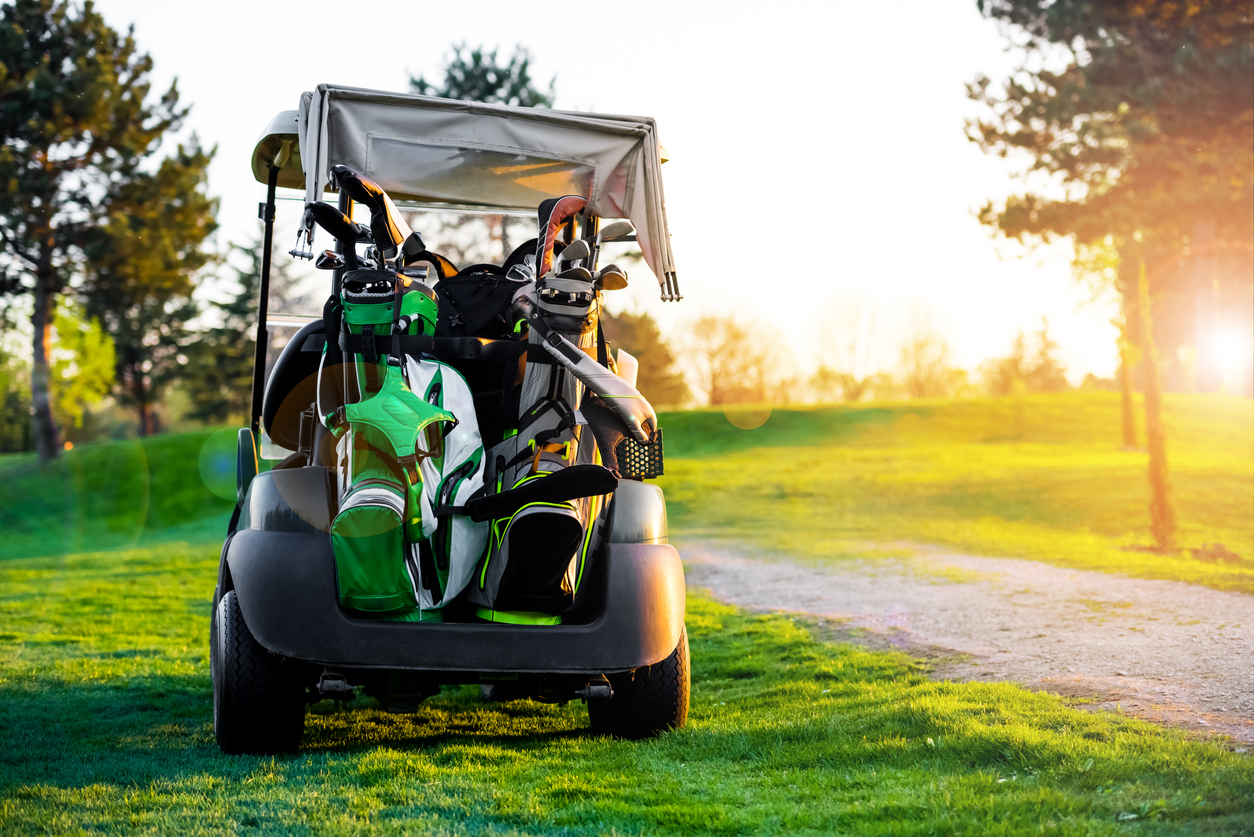
The quiet hum of an electric motor is the soundtrack to life in Clearwater’s retirement communities. It’s the sound of a neighbor heading to a morning tennis match, a couple returning from the community pool, or friends making their way to a sunset dinner at the clubhouse.
The golf cart is woven into the fabric of this lifestyle, a symbol of convenience and community connection. This very familiarity creates a dangerous blind spot. Because they feel safe and slow, we treat them more like recreational toys than the serious vehicles they are.
That sense of security can be shattered in a single, violent moment. A sharp turn taken too fast, a distracted driver looking at their phone, or a sudden collision with a passenger car at an intersection. The results are a jarring contrast to the peaceful life you’ve built.
Instead of planning your next social outing, you are scheduling doctor’s appointments and physical therapy. The easy rhythm of your days is replaced by the stress of medical bills, the pain of recovery, and the frustrating process of dealing with insurance adjusters.
When the vehicle you trusted to carry you through a relaxed retirement becomes the source of your pain and anxiety, you are left to face a future you never planned for.
Charting your course
After an unexpected golf cart accident, finding your direction can be difficult. These essential points provide a map for the road ahead.
- Golf carts are vehicles, not toys. Drivers who operate them negligently by speeding, driving while distracted, or making unsafe turns can be held legally responsible for the harm they cause.
- The injuries from these incidents are often far more severe than people assume. The lack of safety features like seatbelts or airbags means ejections and direct impacts are common.
- Liability can be complex. The responsible party may be the driver, the owner of the cart, or even the community association if poorly maintained paths contributed to the accident.
- Preserving evidence is vital. Take photographs of the scene, the cart, and your injuries. Get the names and contact information of any witnesses who saw what happened.
The Hidden Dangers of Community Transportation

People often underestimate the potential for serious harm involving golf carts precisely because they seem so harmless. This misconception ignores the reality of their design and the environments where they operate.
Unlike passenger cars, golf carts offer virtually no protection to their occupants.
Lack of standard safety features
Standard automobiles are engineered with a suite of safety features to protect occupants in a crash. Golf carts have none of these. There are no airbags, no reinforced steel frames, no anti-lock brakes, and often, no seatbelts.
In a collision or a sharp, unexpected turn, there is nothing to restrain a driver or passenger. Ejections are a common and potentially dangerous outcome, often resulting in direct impact with the pavement or another vehicle.
Rollovers and instability
Golf carts have a high center of gravity and a narrow wheelbase, making them inherently less stable than cars. This design makes them susceptible to rollovers, especially under certain conditions.
A driver’s poor judgment can easily lead to a dangerous rollover. These actions dramatically increase the risk of a serious accident.
- Taking a corner too sharply or at an excessive speed.
- Driving on uneven terrain or steep inclines for which the cart was not designed.
- Overloading the cart with too many passengers, which further raises the center of gravity.
When a cart rolls, occupants can be pinned underneath its weight or thrown clear, resulting in severe orthopedic injuries, internal damage, and head trauma.
Common Causes of Golf Cart Accidents
While each accident has unique circumstances, most incidents in Clearwater’s retirement communities stem from a few common patterns of negligence. Identifying the cause is the first step in establishing who is legally accountable for the resulting injuries.
Negligent operation by the driver
The single most common cause of golf cart accidents is driver error. A driver who acts carelessly or recklessly behind the wheel can be held liable for the injuries they inflict.
This includes speeding on community paths, driving while under the influence of alcohol, using a cell phone while driving, or failing to yield to pedestrians.
Collisions with motor vehicles
Many communities allow golf carts on designated public roads with low speed limits. This places them in direct conflict with cars, trucks, and motorcycles that are much larger, heavier, and faster.
A collision between a car and a golf cart is almost always catastrophic for the cart’s occupants. These accidents often occur at intersections when a car driver fails to see the smaller, slower-moving golf cart.
Pedestrian and bicyclist accidents
Golf carts are relatively quiet, especially electric models. Pedestrians, bicyclists, and others enjoying the community paths may not hear one approaching from behind. A distracted or inattentive cart driver can easily strike a person from behind, causing serious fall-related injuries like hip fractures and concussions.
Determining Legal Responsibility
After an accident, a thorough investigation is necessary to identify all parties who may be legally responsible for your injuries. The fault may not lie solely with the driver of the cart.
The driver and the owner
The most obvious liable party is the person who was driving the golf cart negligently. However, the owner of the cart may also share responsibility. If an owner lends their cart to someone they know is an unsafe driver or allows an unlicensed individual to operate it, they may be held accountable under a theory of negligent entrustment.
The community or homeowners’ association (HOA)
The entity that manages the retirement community, such as an HOA, has a duty to maintain its common areas in a reasonably safe condition. This includes the paths and roadways where golf carts travel.
The HOA may be found negligent if it failed to address known hazards that contributed to the accident. A successful claim could be built on evidence of such failures.
- Poorly maintained paths with large potholes, cracks, or tree root damage.
- A lack of proper signage at intersections or sharp curves.
- Failure to enforce community safety rules regarding golf cart operation.
- Inadequate lighting on paths used after dark.
An investigation into the community’s maintenance records and safety protocols can reveal if their negligence played a part in your injury. This review is a key part of building a comprehensive case.
The golf cart manufacturer
In some cases, the accident may be caused by a mechanical failure or a design flaw in the golf cart itself. This could include brake failure, a faulty accelerator, or a defect that makes the cart excessively unstable. In these situations, a product liability claim might be brought against the manufacturer or distributor of the cart.
Florida’s Laws on Golf Cart Operation
The state of Florida has specific laws that govern where and how golf carts can be used. These rules, found in Florida Statutes § 316.212, are designed to prevent accidents with larger vehicles. A violation of these laws can be strong evidence of negligence in an injury claim.
For example, a standard golf cart cannot legally be operated on public roads with a speed limit greater than 35 mph. To be driven on designated public roads, a cart must be converted into a “low-speed vehicle” (LSV) by being equipped with specific safety features like headlights, brake lights, turn signals, a windshield, and a vehicle identification number.
The Challenge of Using AI for Niche Legal Claims
After an injury, you might turn to an AI chatbot for quick information. While these tools can define legal terms, they lack the capacity for real-world legal reasoning, especially in a specialized area like this.

An AI cannot investigate your community’s HOA maintenance records or analyze the nuances of Florida’s golf cart statutes as they apply to a private path versus a public road. It cannot formulate a strategy based on the unique facts of your case.
Relying on an algorithm for guidance in a complex claim involving multiple potential defendants could lead to costly omissions. For advice grounded in the specifics of your situation, you need a qualified human attorney.
FAQ for Golf Cart Accidents in Clearwater Retirement Communities
I was a passenger on a golf cart when my friend crashed. Can I make a claim?
Yes. As a passenger, you have the right to seek compensation for your injuries. Your claim would likely be against the driver’s insurance, and potentially the community’s insurance if unsafe conditions contributed to the crash. You should not have to bear the financial burden of an injury caused by someone else’s mistake.
Does my auto insurance or homeowners’ insurance cover a golf cart accident?
It depends on your specific policies. Some auto insurance policies specifically exclude golf carts, while some homeowners’ policies may offer limited liability coverage. Do not assume you have coverage. A legal professional can help you review your policies and identify all potential sources of recovery.
What if the accident happened on a private golf course or community path?
The laws of negligence still apply, even on private property. The property owner or community association still has a duty to maintain the area in a safe condition. The fact that it was not a public road does not prevent you from filing a personal injury claim against the at-fault parties.
The driver of the other golf cart says we were both at fault. What happens now?
Florida follows a comparative negligence law. This means that if you are found to be partially at fault, your final compensation may be reduced by your percentage of fault. It is a common tactic for at-fault drivers and their insurers to try to shift blame. A car accident attorney can fight back against these claims by presenting clear evidence of the other driver’s negligence.
A Clearer Path to Recovery
An injury from a golf cart accident can disrupt the peaceful life you have built. You do not have to deal with the medical bills, insurance companies, and legal complexities on your own.

A dedicated personal injury attorney can manage your claim and fight for the financial resources you need to recover. The team at Roman Austin Personal Injury Lawyers is ready to help.
Contact us today for a free, no-obligation consultation. We will listen to what happened and explain your legal options in plain language. Call us at (727) 778-2500 or fill out our online contact form to take the first step.


