

Roman Austin | March 20, 2026 | Car Accidents
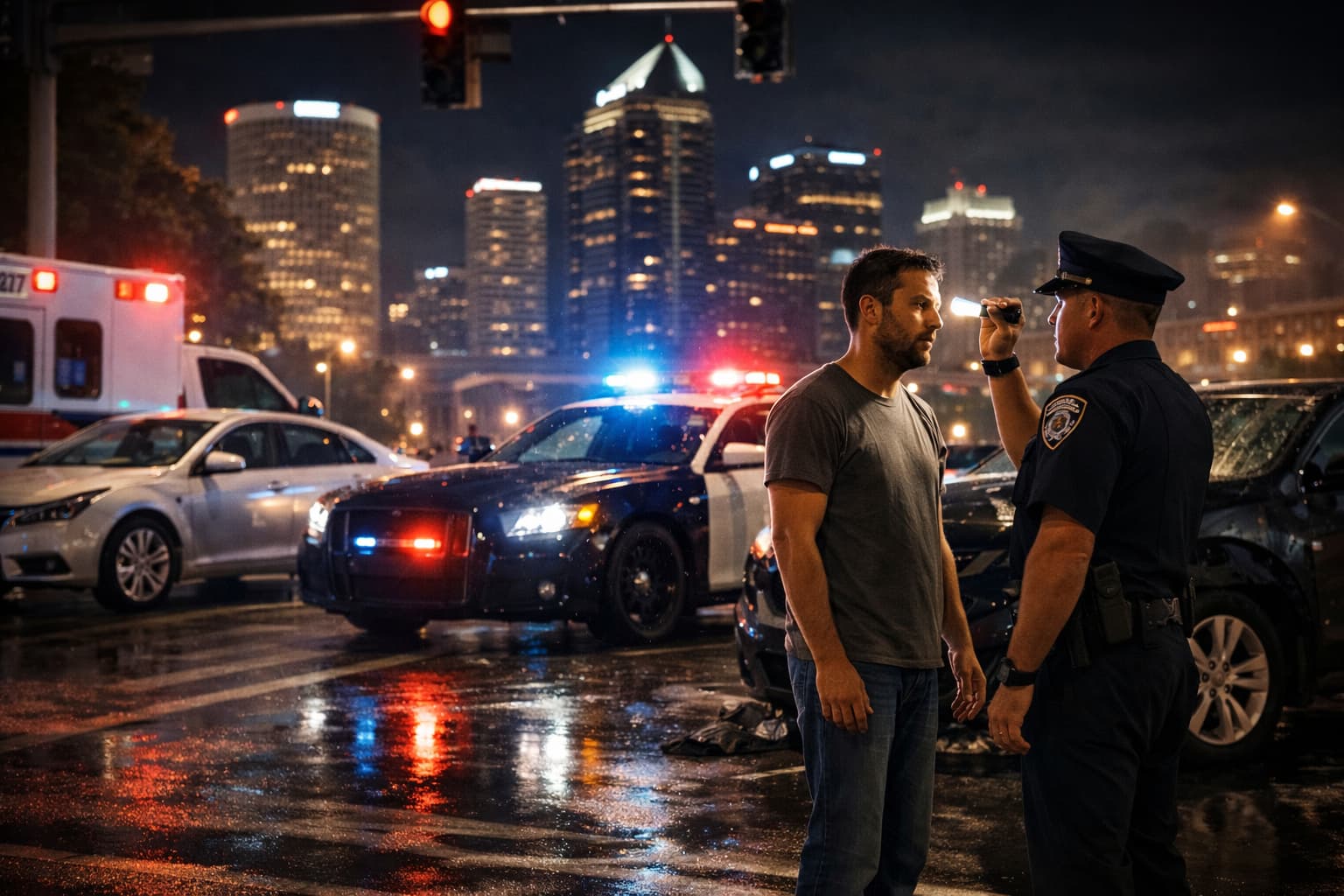
If you are injured by a drunk driver, the experience can leave you shaken, frustrated, and uncertain about what to do next. Crashes caused by impaired driving often lead to serious injuries, ongoing medical care, missed time at work, and growing financial pressure.
Florida law gives victims the right to seek compensation not only for financial losses but, in certain cases, for punitive damages meant to punish reckless conduct and deter future DUI behavior. A Tampa drunk driving accident lawyer can help you understand your rights, gather evidence, and pursue every available form of recovery under Florida law.
Key Takeaways About Drunk Driving Accident Claims and Punitive Damages in Tampa, Florida
- Florida law may allow punitive damages in DUI-related crash cases when clear and convincing evidence shows intentional misconduct or gross negligence. A blood alcohol concentration of 0.08 percent or higher, or other evidence of impairment, may support such a claim depending on the facts.
- Under Florida Statute § 768.736, the punitive damages caps in § 768.73 do not apply in civil actions arising from conduct defined in § 316.193 if the defendant’s alcohol or drug impairment contributed to the plaintiff’s injury or damage.
- Punitive damages are not automatic. The plaintiff must obtain court approval to add a claim for punitive damages under Florida Statute § 768.72.
- Criminal DUI cases and civil personal injury lawsuits are separate proceedings, and the outcome of one does not determine the outcome of the other.
- DUI-related injury claims are generally subject to Florida’s two-year statute of limitations, so timely action is required.
What Are Punitive Damages in a Florida Drunk Driving Accident Case?
Punitive damages are a category of financial recovery that exists separately from compensatory damages. While compensatory damages aim to reimburse you for specific losses like medical expenses, lost income, and pain and suffering, punitive damages serve a different purpose. They exist to punish the defendant for conduct that rises above ordinary negligence and to discourage similar behavior in the future.
When Florida Law Allows Punitive Damages
Under Florida Statute 768.72, a jury may award punitive damages only when clear and convincing evidence shows that the defendant acted with intentional misconduct or gross negligence.
Gross negligence, as defined by the statute, means conduct so reckless that it shows a conscious disregard for the safety of others. Driving while intoxicated may support a finding of gross negligence depending on the specific facts and evidence in the case.
Florida courts have recognized that driving under the influence may, depending on the surrounding facts and evidence, support a finding of gross negligence sufficient to permit a punitive damages claim. Several factors often strengthen a punitive damages argument in DUI crash cases:
- The at-fault driver made a conscious choice to consume alcohol or drugs before getting behind the wheel
- The driver knew or had reason to know that impaired driving creates a serious risk of harm to others
- The driver’s behavior before the crash showed reckless disregard, such as speeding, running red lights, or swerving across lanes
- The driver had prior DUI arrests or convictions, showing a repeated pattern of dangerous behavior
These factors do not guarantee a punitive damages award, but they represent the type of conduct that Florida courts have consistently recognized as meeting the gross negligence standard. This recognition gives DUI accident victims a stronger foundation for pursuing punitive damages than someone involved in a standard rear-end collision or intersection crash.
Why DUI Cases Are Treated Differently Under Florida Statute 768.736
Florida law singles out intoxicated defendants for different treatment when it comes to punitive damages. Under Florida Statute 768.736, the standard punitive damages caps set by Florida Statute 768.73 do not apply to any defendant who had a blood or breath alcohol level of 0.08 percent or higher, or whose normal faculties were impaired by alcohol or drugs at the time of the accident.
In most cases involving punitive damages, the law limits the award to three times the amount of compensatory damages or $500,000, whichever is greater. However, that cap does not apply in cases involving driving under the influence.
As a result, the statutory caps in section 768.73 generally do not apply in qualifying DUI-related cases. However, punitive damages remain subject to constitutional due process limitations and judicial review.
For individuals injured in DUI-related crashes, this distinction can make a meaningful difference, as the potential recovery may be considerably greater.
What Types of DUI Accident Victim Compensation May You Pursue in Tampa?
If a drunk driver injured you or a family member in Tampa or Hillsborough County, your claim may include multiple categories of damages. DUI accident victim compensation in Tampa often exceeds what a standard car accident claim produces because of the added punitive damages component.
Compensatory Damages in a DUI Injury Case
Compensatory damages cover the measurable losses you experienced as a direct result of the accident. These typically include:
- Medical expenses for emergency treatment, hospitalization, surgery, rehabilitation, and ongoing care
- Lost wages from missed work during your recovery and any reduction in future earning capacity
- Pain and suffering, which accounts for physical discomfort and the effect the injury has had on your daily life
- Property damage to your vehicle and personal belongings
- Out-of-pocket costs such as transportation to medical appointments, in-home care, or assistive equipment
These categories apply to any car accident injury claim in Florida. The difference in a DUI case is that punitive damages may be added on top of the full compensatory amount, creating a separate layer of financial recovery that the at-fault driver may be personally responsible for paying.
Why DUI Cases in Tampa Carry Higher Financial Stakes
Many Florida auto insurance policies exclude coverage for punitive damages assessed directly against an insured, but coverage depends on the specific policy language and circumstances. This means that while compensatory damages may come from the at-fault driver’s liability insurance, punitive damages typically come from the defendant’s personal assets.
Under Florida Statute 768.72(1), a plaintiff may obtain discovery of a defendant’s financial worth only after the court grants leave to amend the complaint to assert a punitive damages claim. There are several reasons why DUI accident claims in Tampa often involve higher financial stakes than standard car accident cases:
- The removal of punitive damages caps under Florida Statute 768.736 gives juries broader authority over the award amount
- Impaired drivers tend to cause more severe collisions, leading to higher compensatory damage totals that serve as the baseline for punitive calculations
- The potential for punitive damages may affect how a case is evaluated during settlement discussions, depending on the circumstances
- Florida law permits juries to consider the nature and severity of a defendant’s conduct when determining whether punitive damages are appropriate
The availability of punitive damages in DUI cases may increase potential exposure beyond compensatory damages, depending on the facts and available evidence.
How Does a Punitive Damages Claim Work After a Drunk Driving Accident in Tampa?
Pursuing punitive damages after a drunk driving accident in Tampa follows a specific legal process. You do not simply add a punitive damages claim to your initial complaint. Florida law requires a separate step before the court allows it.
The Legal Process for Adding Punitive Damages to a DUI Accident Claim in Florida
Under Florida Statute 768.72, your attorney must file a motion asking the court for permission to amend the complaint to include punitive damages. The court reviews the available evidence and determines whether there is a reasonable basis for the claim before allowing it to proceed. This procedural step protects against frivolous claims while giving legitimate DUI accident victims a path to pursue the additional damages.
Several types of evidence may support a punitive damages claim in a DUI accident case:
- The at-fault driver’s blood or breath alcohol test results showing a level at or above 0.08 percent
- Police reports documenting signs of impairment such as slurred speech, failed field sobriety tests, or open containers in the vehicle
- Witness statements describing the driver’s behavior before the crash
- The driver’s prior DUI history, which may show a pattern of reckless disregard for public safety
- Toxicology reports confirming drug impairment in addition to or instead of alcohol
The stronger the evidence of intoxication and reckless behavior, the more likely a court is to allow the punitive damages claim to move forward and the more persuasive the case becomes to a jury or during settlement negotiations.
How Does Suing a Drunk Driver in Hillsborough County Differ From a Criminal DUI Case?
Many DUI accident victims in Tampa wonder whether the criminal case against the drunk driver affects their personal injury claim. The criminal case and the civil lawsuit are separate proceedings that operate under different rules, different standards of proof, and different outcomes.
How the Criminal and Civil Cases Relate in a Tampa DUI Accident
The criminal case, prosecuted under Florida Statute 316.193, addresses whether the driver violated Florida’s DUI law and what criminal penalties apply. The civil injury lawsuit addresses whether the driver’s negligence caused your injuries and what financial compensation you may recover.
A criminal conviction may help strengthen the civil case because it establishes that the driver violated the law, but a civil claim does not depend on a conviction to move forward.
Key differences between the two proceedings include:
- The criminal case uses a beyond a reasonable doubt standard of proof, while the civil case uses a lower preponderance of the evidence standard for liability and clear and convincing evidence for punitive damages
- The criminal case may result in jail time, fines, license suspension, and probation, while the civil case focuses on financial compensation for your injuries
- A plea deal or dismissal of the criminal charge does not prevent you from filing or pursuing a civil claim for damages
- Evidence from the criminal case, including police reports, breathalyzer results, and witness testimony, may be used in the civil proceeding
These distinctions matter because some DUI accident victims mistakenly believe that if the criminal case does not go their way, they have no options. The civil claim stands on its own, and the threshold for proving fault in a civil lawsuit is lower than what prosecutors must meet in criminal court.
How Does Roman Austin Help DUI Accident Victims Find a Drunk Driving Accident Lawyer in Tampa, Florida?
A drunk driving accident often produces more severe injuries than a typical car crash because impaired drivers tend to travel at higher speeds, fail to brake, and strike other vehicles or pedestrians with greater force. Roman Austin Car Accident and Personal Injury Lawyers handles car accident and DUI injury cases throughout Tampa and Hillsborough County.
The Tampa Office
The firm’s Tampa office is located at 401 E. Jackson Street, Suite 3319, Tampa, FL 33602, in the heart of downtown Tampa near the Hillsborough County Courthouse. That proximity gives the legal team direct familiarity with the local courts and judges who handle personal injury and punitive damages claims in the area.
Free Consultations for DUI Accident Victims
Roman Austin offers free consultations 24 hours a day, 7 days a week. You may reach out at any time to discuss your DUI accident, ask questions about whether punitive damages might apply to your situation, and learn what your claim might involve. There is no cost and no obligation to move forward.
FAQs for Drunk Driving Accident Lawyer Tampa Florida
Do punitive damages have a cap in Florida DUI accident cases?
The statutory punitive damages caps in section Florida Statute 768.73 do not apply if the defendant was under the influence of alcohol or drugs and that impairment was a contributing cause of the plaintiff’s injury or damage.
How long do I have to file a lawsuit after a drunk driving accident in Tampa?
Florida’s statute of limitations for negligence-based personal injury claims is two years from the date of the injury under Florida Statute 95.11. Missing this deadline may result in losing the right to pursue compensation entirely.
Do I need a criminal conviction against the drunk driver to file a civil lawsuit?
No. The civil injury lawsuit and the criminal DUI case are separate proceedings. You may pursue a civil claim for compensatory and punitive damages regardless of whether the driver is convicted in criminal court.
Does insurance cover punitive damages in a Florida DUI case?
Most auto insurance policies in Florida do not cover punitive damages. These damages typically come from the defendant’s personal assets, which is why investigating the defendant’s financial situation is often part of the legal strategy in a DUI accident case.
What evidence supports a punitive damages claim after a drunk driving accident?
Blood or breath alcohol test results, police reports documenting impairment, witness statements, the driver’s prior DUI history, and toxicology reports may all support a punitive damages claim. Your attorney must present this evidence to the court before the claim is allowed to proceed.
Contact a Drunk Driving Accident Lawyer in Tampa, Florida to Protect Your Claim
DUI accident cases often involve legal issues that go beyond a standard car crash, particularly when punitive damages may be available. Because Florida law imposes strict procedural requirements and filing deadlines, taking timely action can be important to preserving your rights.
If you were injured by an impaired driver in Tampa or elsewhere in Hillsborough County, consulting with a qualified attorney can help you evaluate whether punitive damages may apply and what steps are involved in pursuing a claim.
Roman Austin Car Accident and Personal Injury Lawyers represents individuals in DUI-related injury cases throughout the Tampa area and provides consultations to discuss potential legal options.


