Tampa motorcycle accident statistics tell a story that many riders and their families already know from experience: sharing the road on two wheels in this county carries real risk, and much of it comes from other drivers.
If you or someone you love was hurt because a driver didn't see a motorcycle, turned without checking, or drove distracted, you're not just dealing with a bad day. You're dealing with the aftermath of someone else's mistake, and you deserve straight answers about what the numbers actually mean for you.
A Tampa motorcycle accident attorney can review what happened, explain your options, and offer a free consultation so you don't have to sort through insurance company runaround on your own.
Key Takeaways: Tampa Motorcycle Accident Statistics
- Motorcyclists in Hillsborough County face a much higher risk of severe injury or death in a crash than occupants of enclosed vehicles, even during minor-impact collisions.
- Left-turn crashes at intersections remain one of the most common ways drivers strike riders, often because the driver misjudges a motorcycle's speed or distance.
- Certain corridors, including major interstates and heavily traveled surface roads, see a disproportionate share of motorcycle wrecks tied to congestion and lane changes.
- Florida's helmet laws are narrower than many riders assume, and knowing the actual legal requirements can affect both safety choices and insurance claims.
- Comparative negligence rules in Florida mean fault can be split between multiple parties, which directly shapes how much compensation an injured rider may recover.
What do Hillsborough County motorcycle accident statistics say about rider safety in Tampa?
Hillsborough County crash reports show that motorcyclists face a disproportionately high risk of serious injury and death compared to drivers in passenger vehicles, largely because riders have almost no protection when a car or truck strikes them. Local data points to a few consistent patterns:
● Motorcycle crashes cluster on high-traffic corridors like I-275, I-4, and Dale Mabry Highway, where lane changes and merging create frequent conflict points.
● A large share of collisions happen when another driver fails to see a motorcycle, especially during left turns at intersections.
● Riders are far more likely than car occupants to suffer catastrophic injuries or die in a crash, even at lower speeds.
Rider safety in Tampa depends heavily on driver awareness, road design, and how quickly an injured rider gets legal and medical support after a wreck.
Why Do Motorcycle Crashes Happen So Often in Hillsborough County?
Motorcycle crashes happen frequently in Hillsborough County because the area combines dense commuter traffic, tourist-heavy roadways, and intersections where drivers routinely misjudge a rider's speed.
The Latest Crash Numbers
According to the latest crash data from the Florida Department of Transportation (FDOT):
- 514 total motorcycle crashes occurred in Hillsborough County in a recent year.
- 438 people sustained injuries in those crashes.
- 28 riders suffered fatal injuries.
Authorities in Florida consistently point to a handful of contributing factors rather than one single cause.
Heavy Commuter Traffic on Key Corridors

Commuter congestion on I-275, I-4, and Veterans Expressway creates constant lane changes and merging, and drivers scanning for cars often miss a motorcycle entirely.
A rider's smaller profile makes them easy to overlook in a side mirror or blind spot, particularly during rush hour when everyone is moving fast and paying attention to more than one thing at once.
Left-Turn Collisions at Intersections
Left-turn crashes remain one of the most frequent causes of serious motorcycle injuries in Tampa. A driver waiting to turn left often looks for the shape and size of a car, and a motorcycle's narrower silhouette can trick the eye into thinking it's farther away or moving slower than it actually is.
This split-second misjudgment accounts for a significant share of intersection wrecks countywide.
Seasonal and Tourist Traffic Patterns
Tampa's winter tourist season and events like spring training bring unfamiliar drivers onto local roads, and out-of-town motorists often don't anticipate motorcycles the way regular commuters do.
Rental cars, GPS-focused driving, and unfamiliarity with local traffic patterns combine to raise risk during these months.
What About Injury Severity for Riders?
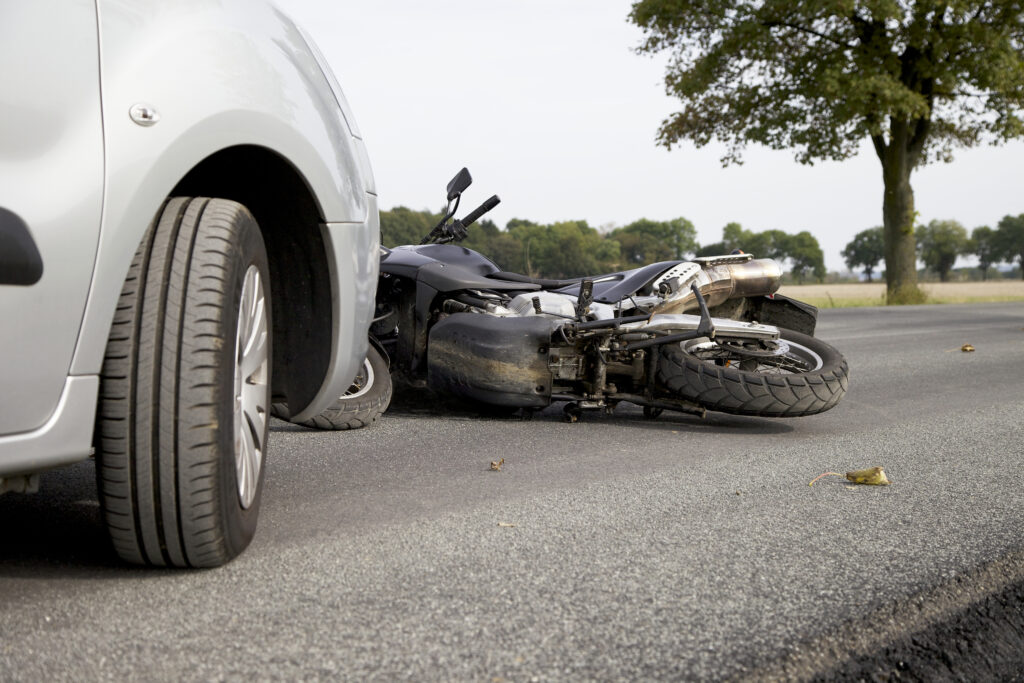
Riders suffer more severe injuries than drivers in enclosed vehicles because a motorcycle offers no metal frame, airbags, or seatbelt to absorb crash force. When a rider goes down, the body itself becomes the point of impact with pavement, guardrails, or other vehicles.
This is why even a crash that looks minor on paper can leave a rider with fractures, road rash covering large areas of skin, or a traumatic brain injury.
Common Injury Types Seen in Local Crashes
Head trauma, spinal cord damage, and lower-extremity fractures show up again and again in motorcycle crash reports from this area. Riders who go down at highway speeds often sustain multiple injuries at once, which complicates both treatment and any resulting insurance claim.
- Head and neck injuries, including concussions and more severe traumatic brain injuries, from impact with pavement or another vehicle.
- Road rash and deep lacerations, which can require skin grafts and leave lasting scarring even after healing.
- Broken bones in the legs, arms, and pelvis, often from the rider being thrown or pinned during impact.
How Injury Severity Affects Legal Claims
Severe injuries generally mean longer recovery timelines, higher medical bills, and a greater need to account for future care in any settlement discussion. An attorney reviewing your case will look closely at whether your injuries are likely to require ongoing treatment, because that shapes how a claim gets valued from the start.
Does Florida Law Require Motorcycle Helmets?
Florida law only requires helmets for riders under 21, or for riders 21 and older who don't carry at least $10,000 in medical insurance coverage specific to motorcycle injuries. This surprises a lot of people who assume helmets are mandatory for everyone.
What This Means for Riders on the Road
A rider who qualifies for the helmet exemption can legally ride without one, but choosing to skip a helmet can still come up during an insurance claim, even when it has no bearing on who caused the crash. Adjusters sometimes try to use a rider's choices, like helmet use or the type of gear worn, to shift blame or reduce a payout.
How Helmet Use Can Affect a Claim
Wearing a helmet doesn't change who caused the collision, but it can influence how an insurance company frames the extent of your injuries.
If you were hurt in a crash and weren't wearing a helmet, that fact alone doesn't bar you from recovering compensation for a driver's negligence. However, it may become a point of dispute worth addressing directly with an attorney.
What Should You Do After a Motorcycle Accident in Tampa?
Getting medical care right away and documenting everything gives you the strongest foundation for both your health and any future claim. A few habits make a real difference in how a case unfolds later.
Protecting Your Health First
Seeking medical evaluation immediately matters even if you feel okay, since injuries like concussions or internal bleeding sometimes take hours to show symptoms. Following through on every recommended follow-up appointment also creates a medical record that ties your injuries directly to the crash date.
Building a Paper Trail
Several records become valuable if you decide to pursue a claim:
- Keeping the police report, photos of the scene, and contact information for any witnesses who saw what happened.
- Saving medical bills, prescription receipts, and records of missed work tied to your recovery.
- Writing down how your injuries have affected daily tasks, sleep, or activities you used to enjoy.
Handling Insurance Contact Carefully
Avoiding recorded statements to the other driver's insurance company before speaking with an attorney protects you from having early, incomplete information used against your claim later. Adjusters often ask questions designed to minimize what they eventually pay.
| Action | Why It Matters |
|---|---|
| Seek Immediate Medical Care | Ensures health is prioritized, diagnoses hidden injuries (like concussions), and creates a medical record. |
| Follow Up on Appointments | Establishes a clear medical trail connecting injuries to the crash date. |
| Build a Paper Trail | Collects police reports, photos, witness info, bills, and receipts to support your claim. |
| Document Impact | Records how injuries affect daily life, sleep, and activities to help value the claim. |
| Limit Insurance Communication | Prevents recorded statements from being used against you to minimize your payout. |
Who Pays When Multiple Drivers Share Fault for a Crash?
Florida applies a modified comparative negligence rule, which means compensation gets reduced by a rider's percentage of fault, and a rider found more than 50 percent at fault cannot recover damages at all.
This matters enormously in motorcycle cases, where insurance companies frequently try to argue that a rider's speed, lane position, or visibility contributed to the crash, even when another driver's mistake started the chain of events.
How Comparative Negligence Plays Out in Real Cases
An insurance adjuster reviewing a Tampa motorcycle claim will look for any reason to assign partial fault to the rider, because doing so lowers the payout. Dashcam footage, witness statements, and crash reconstruction can push back against unfair fault allocation, which is part of why early evidence gathering matters so much.
Why Riders Need Someone Building Their Case from Day One
A driver who didn't see a motorcycle, misjudged a turn, or was distracted rarely admits full responsibility on the spot, and their insurance company's job is to minimize what they pay out, not to make sure you're compensated fairly.
An attorney who knows Hillsborough County motorcycle cases understands how local insurers tend to argue these claims and can push back with evidence rather than assumptions.
Handling the medical documentation, fault investigation, and negotiation on your own while you're trying to recover from serious injuries puts you at a real disadvantage against a company that handles these disputes every day.
What Do Tampa Motorcycle Accident Trends Suggest for the Future?
Tampa motorcycle accident trends point toward continued risk as the region's population and traffic volume keep growing, particularly along corridors already known for congestion.
Ongoing development in areas like Wesley Chapel and South Tampa adds more vehicles to roads that weren't originally designed for current traffic levels, and that mismatch tends to show up in crash data over time.
Infrastructure Changes and Rider Safety
Some intersections have seen updated signal timing or added turn lanes aimed at reducing left-turn collisions, though progress varies by location. Motorcycle rider safety in Hillsborough County will likely depend on a combination of infrastructure investment, driver education, and consistent enforcement of distracted driving laws in the years ahead.
Practical Takeaways for Riders Today
Riders can't control what other drivers do, but staying visible with reflective gear, maintaining space around turning vehicles, and avoiding peak congestion windows when possible can reduce exposure to the most common local crash scenarios.
None of these precautions eliminate risk entirely, since the underlying problem is driver attentiveness, not rider behavior.
Related Posts
Frequently Asked Questions About Motorcycle Accident Claims in FL
How long do I have to file a motorcycle accident claim in Florida?
Florida generally allows two years from the date of a crash to file a personal injury lawsuit, though certain circumstances can shorten or extend that window, so speaking with an attorney soon after a crash helps protect your options.
Will my motorcycle insurance cover a crash caused by another driver?
Your policy may provide some coverage regardless of fault, but full compensation for injuries typically comes from pursuing a claim against the at-fault driver's insurance, which an attorney can help evaluate.
What if the other driver doesn't have enough insurance to cover my injuries?
Underinsured motorist coverage, if you carry it, may help fill the gap between what the at-fault driver's policy pays and your actual damages, and reviewing your own policy early on can clarify what's available.
Can I still recover compensation if I wasn't wearing a helmet?
Yes, not wearing a helmet doesn't automatically bar you from compensation, though it may become a disputed issue depending on how your injuries relate to helmet use.
How is pain and suffering calculated in a motorcycle injury claim?
There's no fixed formula; it typically factors in the severity of your injuries, your recovery timeline, and how the crash affected your daily life, all of which an attorney can help document and present.
Contact Roman Austin Car Accident and Personal Injury Lawyers
Attorney and Founder
If a driver's mistake left you or someone you love hurt in a Tampa motorcycle crash, you don't have to sort through medical bills, insurance calls, and fault disputes by yourself.
The attorneys at Roman Austin Car Accident and Personal Injury Lawyers can review the details of what happened, gather the evidence that supports your side of the story, and handle communication with insurance adjusters so you can focus on getting better.
Call us at (813) 422-7772 for a free consultation, and let's talk through what your next step should look like.
Roman Austin Car Accident and Personal Injury Lawyers: 401 E Jackson St Suite 3319, Tampa, FL 33602
Mark S. Roman
Board Certified Civil Trial Attorney and Founder
Mark S. Roman is the founder of Roman Austin Car Accident and Personal Injury Lawyers and a Board Certified Civil Trial Lawyer, a credential held by fewer than 2% of Florida attorneys. A Tampa Bay native, he has practiced throughout Florida since 1986 and founded the firm in 1996 to represent injured people in his hometown.
He earned a B.S. in Journalism from the University of Florida in 1981 and his J.D. from Florida State University College of Law in 1986. Mark is AV Rated by Martindale-Hubbell, holds a perfect 10 AVVO rating, and belongs to the Multi-Million Dollar Advocates Forum. He has served on the Florida Bar Grievance Committee for both Pinellas and Pasco counties, chairing the Pasco committee.
Author's Bio

