An intersection crash usually comes down to a single question: who had the right to be there? When the other driver insists the light was yellow, or that you came out of nowhere, a Clearwater intersection accident lawyer at Roman Austin can gather the proof that answers that question for you.
Our firm represents people hurt in red-light, left-turn, and T-bone crashes at intersections across Clearwater and Pinellas County, from US-19 to Gulf-to-Bay Boulevard. Consultations are free, our in-house team answers 24/7, and you can reach us at (727) 787-2500.
Who Is at Fault in an Intersection Crash in Florida?
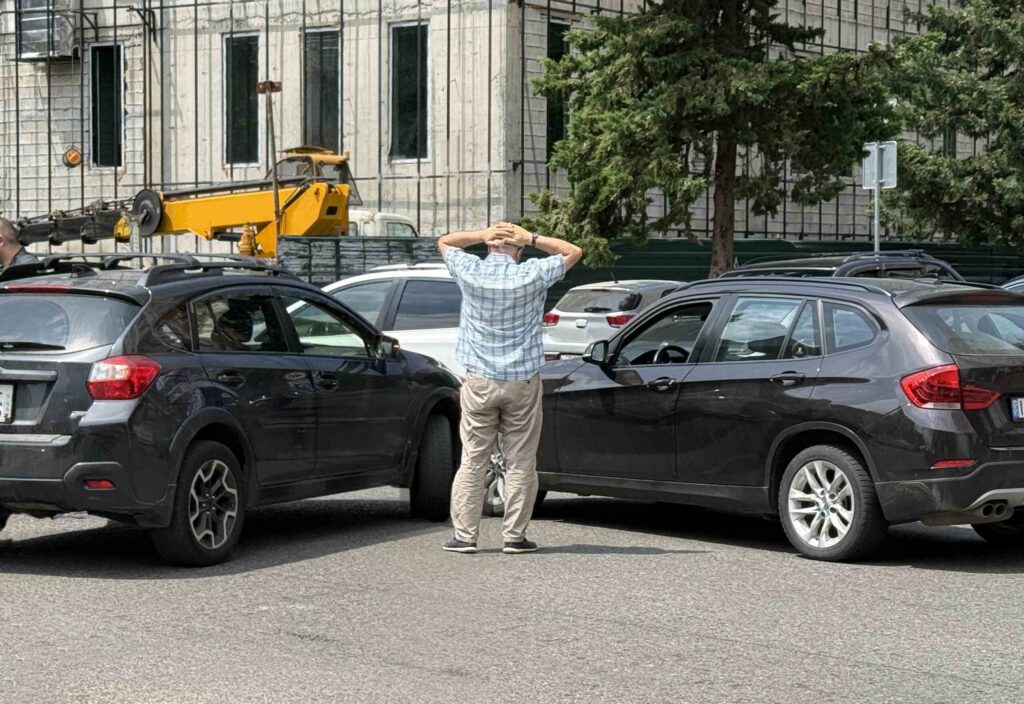
Fault in a Florida intersection crash usually belongs to the driver who failed to yield the right of way or ignored a traffic signal or sign. Florida's traffic code sets these duties, and violations often become the backbone of a negligence claim.
The rules that come up most often in Clearwater intersection claims include:
- Drivers turning left must yield to oncoming traffic that is close enough to be an immediate hazard, under section 316.122.
- Drivers must obey traffic control signals, including steady red lights, under section 316.075.
- Drivers at stop signs must stop and yield to vehicles already in or approaching the intersection.
- Drivers turning right on red must stop first and yield to traffic and pedestrians.
A traffic citation can help a claim, but it does not decide fault in a civil case. Insurers still argue that both drivers share blame, which is why independent evidence matters.
What Does a Yellow Light Mean Under Florida Law?
A steady yellow light in Florida warns drivers that the green movement is ending and a red signal is about to follow, under section 316.075. Florida law does not make it illegal to enter an intersection on yellow, but a driver who enters after the light turns red violates the statute.
That distinction often decides intersection claims. A driver who says the light "was still yellow" may be right about entering legally and still be negligent if they sped up to beat the change or could have stopped safely. Signal timing records and video showing the exact moment each vehicle crossed the stop line usually settle the question better than either driver's memory.
Clearwater Intersections Where Claims Often Begin

Many of the intersection claims we handle arise along Clearwater's busiest corridors. These roads combine high volume, multiple turn lanes, and drivers unfamiliar with local patterns.
US-19 and Its Cross Streets
US-19 crosses major roads such as Sunset Point Road, Drew Street, and Countryside Boulevard. Frontage roads, overpasses, and long signal cycles create confusion about lanes and turn arrows, and drivers rushing to beat a light can cause serious side-impact crashes.
Gulf-to-Bay Boulevard, McMullen-Booth Road, and Belcher Road
Gulf-to-Bay Boulevard carries commuter and beach traffic through dense commercial stretches. McMullen-Booth Road and Belcher Road see heavy north-south flow, with left-turn conflicts at shopping center entrances and side streets. Our Belcher Road office sits along one of these corridors.
Roundabouts Near Clearwater Beach
The roundabout where the Memorial Causeway meets Clearwater Beach handles a steady mix of residents, tourists, pedestrians, and trolley traffic. Drivers entering a roundabout must yield to vehicles already circulating, and confusion about who should yield is a common source of side-impact and sideswipe collisions there. The same evidence principles apply: video, witness accounts, and vehicle damage patterns usually show which driver failed to yield.
Common Types of Intersection Crashes
Intersection crashes take several forms, and each raises different evidence questions.
| Crash type | How it usually happens | Disputed issue |
|---|---|---|
| Red-light T-bone | A driver enters on red and strikes a crossing vehicle | Signal color at entry |
| Left-turn collision | A turning driver misjudges oncoming traffic | Speed and distance of the oncoming car |
| Stop-sign crash | A driver rolls through a stop | Whether the driver stopped and looked |
| Right-on-red crash | A driver turns into a pedestrian or through traffic | Whether the driver yielded |
| Rear-end at a light | A driver fails to stop for queued traffic | Following distance and attention |
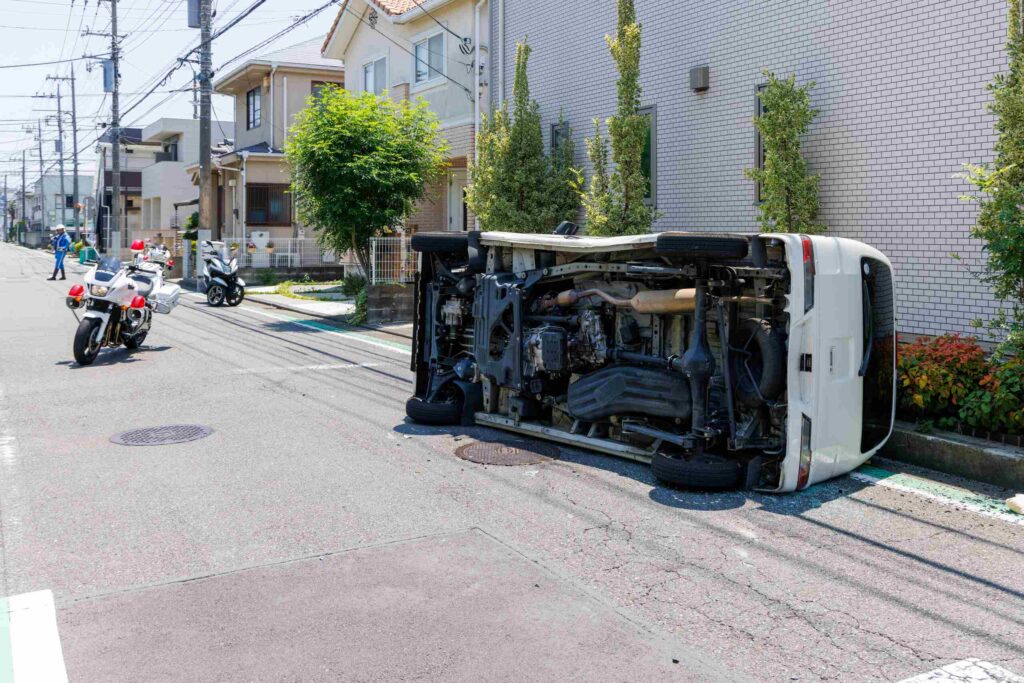
Side-impact crashes are especially dangerous because the doors offer little protection, and they often overlap with claims on our head-on collision page when a turning vehicle strikes an oncoming car at an angle.
How Do You Prove Who Had the Green Light?
Proving who had the green light usually requires evidence that does not depend on either driver's memory. Our attorneys look for objective sources early, before they are overwritten or lost.
Video and Signal Data
Business security cameras, traffic cameras, dash cameras, and bus or rideshare cameras may capture the crash. Signal timing records from the agency that controls the light can show how long each phase lasts, which helps reconstruct the sequence.
Vehicle Data and Physical Evidence
Event data recorders can show speed and braking in the seconds before impact. Damage patterns, final resting positions, and debris fields help a reconstructionist determine angles and speeds. Distraction is a frequent cause of signal violations, and our team also handles distracted driving crashes where phone records come into play.
How Shared Fault Affects a Clearwater Intersection Claim

Florida's modified comparative negligence rule under section 768.81 bars recovery for anyone more than 50% at fault and reduces damages for anyone 50% or less at fault. Intersection cases are especially vulnerable to blame-shifting, such as claims that the injured driver was speeding through a stale yellow.
Consider a driver awarded damages who is found 20% responsible for entering late on a yellow. That driver recovers 80% of the award. At 51%, the same driver recovers nothing, which shows why each piece of timing evidence matters.
What Insurance Applies After a Clearwater Intersection Crash?
Several insurance policies can apply after a Clearwater intersection crash, and they pay in a set order. Your own personal injury protection (PIP) coverage pays first for a share of medical bills and lost wages, regardless of who ran the light. Claims beyond PIP then turn to the coverage available from the at-fault driver and from your own policy.
The policies we look for in an intersection claim include:
- The at-fault driver's bodily injury liability coverage, which Florida does not require most drivers to carry.
- Your uninsured and underinsured motorist (UM/UIM) coverage, if you bought it, including whether it stacks across vehicles under section 627.727.
- Commercial or employer policies when a work vehicle, delivery van, or rideshare driver caused the crash.
- Umbrella policies held by the at-fault driver or a member of their household.
Because many Florida drivers carry only the required PIP and property damage coverage, your own UM coverage is often the most important source of recovery in a serious T-bone or left-turn crash. We review the declarations page and signed selection forms rather than relying on what an adjuster says is available.
What Damages Can You Recover After an Intersection Crash in Clearwater?
Damages after a Clearwater intersection crash can cover both your financial losses and the personal toll of your injuries, depending on how serious those injuries are. Common categories include:
- Medical expenses, including emergency care, surgery, therapy, and future treatment.
- Lost wages and reduced earning capacity when an injury keeps you from working.
- Property damage to your vehicle and personal belongings.
- Pain, suffering, mental anguish, and loss of enjoyment of life.
Recovering non-economic damages such as pain and suffering from the at-fault driver generally requires meeting the serious injury threshold in section 627.737(2), which includes a permanent injury within a reasonable degree of medical probability. Side-impact crashes frequently cause fractures, shoulder and spine injuries, and head injuries that may meet that standard, but the answer depends on your medical records. Florida does not cap non-economic damages in ordinary car crash cases.
How Florida Values Medical Expenses
Since 2023, section 768.0427 generally limits evidence of past medical expenses to amounts actually paid or owed, and it adds disclosure rules for treatment under a letter of protection. Those rules can change how a claim is valued, so we track not only what your providers charge but also what has been paid and by whom.
Steps in a Clearwater Intersection Crash Claim
Our claim process is designed to protect evidence first and value the claim once the medical picture is clear.
- Get medical treatment within 14 days so personal injury protection (PIP) benefits under section 627.736 remain available.
- Request the crash report from the Clearwater Police Department, the Pinellas County Sheriff's Office, or the Florida Highway Patrol, depending on who responded.
- Send preservation letters for video, vehicle data, and signal records.
- Identify every insurance policy, including uninsured motorist coverage.
- Present the claim, negotiate, and file suit in Pinellas County if the offer does not reflect the harm.
Most negligence claims must be filed within two years under section 95.11(5)(a), and pain-and-suffering claims in car crashes generally require meeting Florida's serious injury threshold.
Mistakes That Can Weaken an Intersection Crash Claim
Intersection claims often turn on small details, and some common missteps give insurers room to argue about fault or injuries. These are the problems we see most often:
- Giving a recorded statement to the other driver's insurer before the evidence is reviewed.
- Saying "I didn't see them" or apologizing at the scene, which insurers may treat as an admission of fault.
- Repairing or releasing the vehicle before its event data recorder is downloaded.
- Waiting to see a doctor, which can affect PIP benefits and give the insurer an argument that the crash did not cause the injury.
- Posting about the crash or your activities on social media while the claim is open.
- Accepting an early settlement before your doctors understand the long-term picture.
None of these mistakes automatically ends a claim, but each one can make it harder to prove what happened. Talking with a lawyer before speaking to the at-fault driver's insurer helps you avoid them.
Why Clearwater Drivers Work With Roman Austin
We are based in Clearwater, with offices on North Belcher Road and Congress Avenue, and we know these intersections as drivers ourselves.
- Founder Mark S. Roman is a Board Certified Civil Trial Lawyer through The Florida Bar, a certification held by fewer than 2% of Florida attorneys.
- Our firm has been recognized among Top 50 verdicts in Florida.
- More than 1,200 clients have left our firm five-star Google reviews.
Intersection crashes are one part of our broader work as Clearwater car accident lawyers. Every case depends on its facts, and past results do not guarantee future outcomes. Call (727) 787-2500 for a free consultation.
FAQs: Clearwater Intersection Accident Lawyer
What if there are no witnesses to my intersection crash?
An intersection crash claim in Florida can still succeed without eyewitnesses when video, vehicle data, and physical evidence show what happened. Canvassing nearby businesses for footage quickly is often the most valuable first step.
Does a ticket for the other driver mean I win?
A traffic ticket issued to the other driver helps a Florida injury claim but does not automatically establish fault in civil court. Insurers can still argue shared responsibility, so other evidence remains important.
What if a pedestrian or cyclist was hit at the intersection?
Pedestrians and cyclists hurt at Clearwater intersections can bring claims against drivers who failed to yield. Their own PIP or a household member's PIP may pay first, and the at-fault driver's coverage may apply after that.
Can a city or county be responsible for a dangerous intersection?
A government agency may share responsibility for a crash caused by a malfunctioning signal or dangerous design in some circumstances. These claims require written notice under section 768.28 and face damages caps, so they need early review.
How long does an intersection crash claim take to resolve?
Many Clearwater intersection claims resolve within several months to a year after treatment ends, though disputed-fault cases that require reconstruction or a lawsuit can take longer.
Can I get the traffic signal timing records myself?
Signal timing records are generally public records kept by the city, county, or state agency that operates the signal, and individuals can request them. Records showing how a signal was programmed on the day of the crash are more useful than current settings, so a lawyer usually requests the historical timing and any maintenance logs together.
Let the Evidence Settle the Argument

Attorney and Founder
You should not have to win a shouting match over who had the light. Roman Austin can track down the video, data, and records that tell the real story while you focus on healing. Call (727) 787-2500, day or night, to speak with our Pinellas County crash attorneys at no cost.
Past results do not guarantee a similar outcome. Each case is unique and must be evaluated on its own merits.