Motorists making left turns across oncoming traffic cause a massive portion of severe Tampa motorcycle accident cases. Frequently, the driver claims they simply never saw the oncoming rider.
Dense commercial corridors like Dale Mabry Highway and Hillsborough Avenue feature heavy multi-lane congestion, high speed limits, and complex turn lanes that increase visual distractions for drivers. When a driver cuts directly across your travel lane, severe physical harm and costly hospital bills follow.
If a careless driver turned into your path along a busy Hillsborough County roadway, contacting a knowledgeable Tampa motorcycle attorney for a free case review helps protect your financial recovery options.
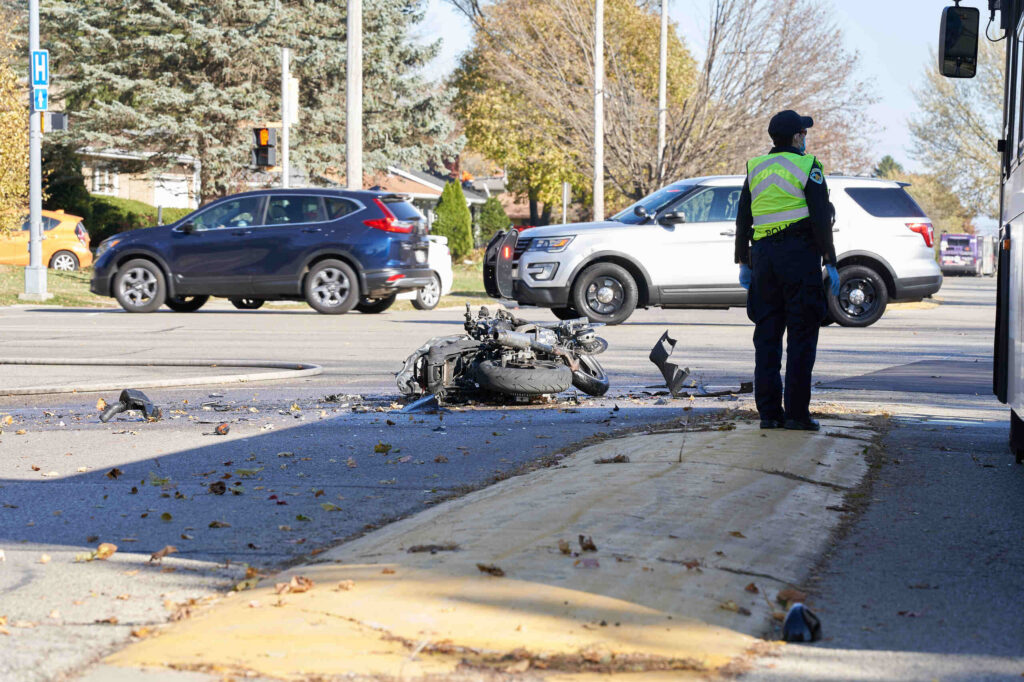
Key Takeaways: Left-Turn Motorcycle Accidents
- Inattentional blindness leads drivers to overlook oncoming motorcycles at busy commercial intersections
- Florida law requires left-turning drivers to yield right-of-way to all oncoming traffic
- Event data recorders and nearby security cameras capture objective proof of driver negligence
- Comparative fault rules allow riders to recover losses even if insurers dispute speed or visibility
- Strict filing cutoffs govern civil lawsuits and administrative claims against public agencies in Florida
How do you prove a driver never saw you after a left-turn motorcycle crash in Florida?
Proving a driver failed to see your motorcycle requires securing traffic camera video, vehicle black box data, cell phone records, and physical crash scene evidence before it disappears.
- Eyewitness statements confirm your motorcycle had the legal right-of-way and maintained headlight visibility before the impact.
- Accident reconstruction models establish speed, line of sight, and the exact distance at which the driver should have spotted your vehicle.
- Phone activity records show if the motorist was texting, using social media, or distracted by in-vehicle screens while making the turn.
Collecting prompt digital evidence strengthens your claim against insurance adjusters who attempt to assign unfair blame to the motorcyclist.
Why Are Intersections Like Dale Mabry Highway and Hillsborough Avenue So Hazardous for Riders?
High speed limits, multi-lane road layouts, and frequent commercial turn bays make major Tampa thoroughfares primary spots for left-turn motorcycle collisions.
Drivers turning left off Dale Mabry Highway near Raymond James Stadium or along the busy retail stretches of Hillsborough Avenue must track multiple lanes of fast-moving traffic. Congested travel lanes, glare from the Florida sun, and heavy commercial delivery vehicles frequently block a driver's view of approaching traffic.
Drivers rushing to beat oncoming traffic often make split-second turns without taking a second look for smaller two-wheeled vehicles.
How Does the Visual Profile of a Motorcycle Contribute to Left-Turn Impacts?
A motorcycle presents a narrow visual profile that makes judging its approach speed and actual distance hard for drivers scanning multi-lane roads.
When a driver looks down Hillsborough Avenue, their brain scans primarily for the large, rectangular shapes of trucks and passenger cars. This cognitive shortcut causes drivers to look directly at an approaching motorcycle without consciously registering its presence.
Despite an oncoming rider running daytime running lights and traveling within posted speed limits, the turning driver pulls directly into the rider's path. Proving that the driver had an unobstructed line of sight demonstrates that a careful driver should have seen the motorcycle.
What Role Does Distracted Driving Play in Intersection Collisions?
Drivers using cell phones or navigating built-in dashboard screens routinely fail to spot oncoming motorcycles before starting a turn.
Taking eyes off the road for just two seconds at 45 miles per hour means driving blind for over 130 feet. Drivers waiting in left-turn lanes often glance at mobile devices while waiting for traffic gaps.
When they glance up, they execute the turn without carefully verifying that the lane remains clear.
What Does Florida Traffic Law Say About Left-Turn Right-of-Way?
Florida law requires any driver making a left turn across traffic to yield the right-of-way to all approaching vehicles coming from the opposite direction.
Under Florida Statute 316.122, a driver intending to turn left at an intersection or into an alley, private road, or driveway must yield to any vehicle approaching from the opposite direction that is close enough to pose an immediate hazard. The law places the primary duty of care on the turning driver.
A driver who turns into an oncoming motorcycle violates state traffic statutes unless the rider was traveling at an extreme speed or operating without lights at night. Dale Mabry motorcycle accidents frequently result from turning drivers failing to obey this clear yield requirement.
How Do Police Officers Assess Fault at the Scene of a Left-Turn Crash?
Police officers usually cite the turning driver for failing to yield the right-of-way after investigating an intersection collision.
Officers examine vehicle damage positions, talk to witnesses, and review traffic signal patterns to draft the official crash report. While a traffic ticket provides strong support for your personal injury claim, insurance companies frequently dispute the officer's findings. Insurers argue that the motorcyclist was speeding or riding erratically to try to shift blame away from their insured driver.
How Do You Prove the Driver Should Have Seen Your Motorcycle?
Proving that a driver failed to exercise reasonable care requires gathering technical crash scene evidence, digital camera footage, and physical black box data.
Securing objective proof early stops insurance adjusters from blaming the motorcyclist for the impact. Legal teams launch targeted investigations to gather key proof before it is erased or lost:
- Commercial surveillance video from nearby businesses, gas stations, and traffic intersection monitoring systems that caught the crash on camera.
- Vehicle Event Data Recorders that document the automobile's exact speed, brake application times, and steering wheel movements just before impact.
- Driver cell phone logs showing active texting, call activity, or data usage during the moments leading up to the collision.
- Physical evidence from the pavement, including tire skid marks, gouge marks, and debris fields that show vehicle movement paths.
- Forensic accident reconstruction reports created by engineering experts who rebuild the exact timeline and lines of sight.
What Evidence Proves You Maintained Proper Speed and Visibility?
Demonstrating that your motorcycle had its lights on and maintained lawful speeds eliminates the insurance company's main defense strategies.
Forensic engineers examine headlight bulb filaments to prove the light was illuminated during the crash impact. Analyzing skid mark lengths and motorcycle damage patterns establishes that the rider was traveling at a reasonable speed.
Showing that you operated your bike safely proves the left-turning driver caused the Hillsborough Avenue motorcycle crashes.
How Do You Handle Insurance Claims for Proving Fault in a Left-Turn Motorcycle Accident?
Insurers use anti-biker bias and allegations of excessive speed to lower settlement payouts or deny liability after a left-turn crash.
Adjusters know that non-riders often assume motorcycles travel faster than they actually do. Insurance representatives use witness statements from confused drivers to claim the rider came out of nowhere.
Having a skilled attorney handle all communications stops adjusters from using tricky questioning tactics to damage your case value.
How Does Florida's Comparative Fault Standard Impact Your Injury Claim?
Florida operates under a modified comparative fault standard, which allows you to recover damages as long as your fault remains at 50 percent or lower.
Under Florida Statute 768.81, the court reduces your total financial award by your exact percentage of responsibility. For example, if a judge calculates your total losses at $300,000 but finds you 10 percent responsible due to minor speeding, your final recovery equals $270,000.
However, if the insurance company successfully proves you bear 51 percent or more of the blame, Florida law prevents you from receiving any compensation. Establishing that the turning driver holds complete responsibility preserves your right to full financial recovery.
What Types of Damages Can Victims Recover After a Left-Turn Crash?
Victims injured in severe left-turn collisions can recover financial compensation for out-of-pocket economic losses and personal physical suffering.
A left-turn motorcycle accident often hurls the rider over the handlebars or into the automobile's windshield, causing severe bodily injuries. A complete personal injury claim addresses both immediate costs and long-term care needs:
- Emergency Medical Bills: Direct payment for ambulance transport, emergency room treatments, surgical procedures, and intensive care stays.
- Long-Term Rehabilitation: Coverage for ongoing physical therapy sessions, occupational therapy, medical equipment, and future reconstructive surgeries.
- Lost Wages and Benefits: Full reimbursement for paychecks missed while off work during your initial recovery phase.
- Diminished Earning Capacity: Compensation for long-term reduction in earning ability if permanent physical limitations prevent returning to your trade.
- Physical Pain and Suffering: Financial recovery for physical discomfort, bodily restrictions, and reduced quality of life.
- Property Damage: Money to repair or replace your damaged motorcycle, helmet, and protective riding gear.
What Practical Steps Should You Take Following an Intersection Crash in Tampa?
Taking structured actions after an intersection collision preserves valuable legal evidence and protects your personal injury claim.
Gathering data while at the scene prevents valuable digital proof from disappearing. Injured individuals find it helpful to take specific, methodical steps following an accident:
- Call 911 immediately so law enforcement can secure the scene and emergency medical personnel can treat physical trauma.
- Capture clear photos of all vehicle positions, damaged motorcycle parts, traffic signals, turn lane markings, and visible bodily injuries.
- Collect names, phone numbers, and addresses from all independent witnesses who saw the crash occur.
- Avoid making recorded statements or discussing crash details with insurance adjusters before consulting a legal representative.
- Keep an organized file containing all medical bills, doctor discharge forms, physical therapy schedules, and records of lost work hours.
What Are the Legal Deadlines for Filing a Motorcycle Injury Lawsuit in Florida?
Florida law gives you two years from the crash date to file a personal injury lawsuit against a private driver in civil court.
If a careless driver turns into your path, you must file a formal lawsuit within two years of the incident. Failing to meet this deadline bars you from recovering compensation for hospital bills, lost income, or physical pain.
Starting your legal claim early gives your attorney time to locate witnesses, secure traffic camera logs, and build a strong case.
What Deadlines Apply to Claims Involving Public Agencies and Road Defects?
Claims against government bodies for bad road design, missing turn signals, or dangerous construction zones require serving a formal written notice within three years under Florida Statute 768.28.
When bad signal timing or unmaintained road infrastructure contributes to an intersection collision, public agencies may share liability. Florida sovereign immunity laws require serving detailed administrative notices to the relevant agency and the Department of Financial Services before filing a lawsuit.
The agency receives a mandatory 180-day investigation period to review your claim, requiring early preparation to satisfy all statutory rules.
Why Is Having an Attorney Essential for Left-Turn Motorcycle Claims?
Left-turn collision claims involve complex fault disputes, anti-biker bias, and aggressive insurance tactics that make legal representation vital.
Insurance adjusters work hard to protect corporate profits by blaming motorcyclists for crashes, especially when drivers claim they never saw the rider. A skilled attorney levels the field by launching independent investigations, hiring accident reconstruction experts, and building evidence that proves the automobile driver failed to yield.
Without legal representation, injured victims often face denied claims or accept low settlement offers that fail to cover long-term medical care, lost income, or permanent physical limitations.
Frequently Asked Questions About Left-Turn Motorcycle Accidents in FL
What if the driver who turned left into my motorcycle claims I was speeding?
An attorney counters speed allegations by hiring accident reconstruction specialists to analyze skid marks, vehicle damage, and black box data. Proving your actual speed prevents the insurance company from using false assumptions to lower your settlement payout.
Can I still recover money if I was not wearing a helmet during the crash?
Yes, under Florida law, riders over 21 carrying required insurance coverage can legally ride without a helmet. Failing to wear a helmet does not prevent you from recovering compensation, though insurance companies may argue comparative fault for specific head injuries.
What should I do if the turning driver's insurance company calls me right after the accident?
Politely decline to give a recorded statement and do not discuss your physical injuries or fault. Tell the adjuster that your attorney will handle all future communications directly to protect your rights.
How does Personal Injury Protection work for injured motorcyclists in Florida?
Florida law exempts motorcycles from mandatory Personal Injury Protection requirements, meaning PIP benefits do not cover motorcycle drivers. Motorcyclists must rely on personal health insurance, Medical Payments coverage, or third-party bodily injury claims against the at-fault driver to pay medical bills.
How much does it cost to hire a lawyer for a left-turn motorcycle injury claim?
Our law firm operates on a contingency fee framework, meaning you pay zero out-of-pocket costs to hire our legal team. We cover all investigation and court filing fees, receiving legal payment only after securing a financial recovery for you through a settlement or court verdict.
Contact Roman Austin Car Accident and Personal Injury Lawyers
If you suffered severe injuries in a left-turn motorcycle crash caused by a careless driver in Florida, do not let insurance carriers minimize your recovery or unfairly blame you for the impact.
Our legal team understands how intersection collisions occur, and we stand ready to investigate crash scene details, challenge aggressive insurance adjusters, and fight for full financial compensation for your losses.
Contact Roman Austin Car Accident and Personal Injury Lawyers today at (727) 787-2500 for a free case review with a skilled attorney. We’re available 24/7 to answer your call and address your questions and concerns.
Roman Austin Car Accident and Personal Injury Lawyers: 1811 N Belcher Rd, Suite I-1, Clearwater, FL 33765

Mark S. Roman
Board Certified Civil Trial Attorney and Founder
Mark S. Roman is the founder of Roman Austin Car Accident and Personal Injury Lawyers and a Board Certified Civil Trial Lawyer, a credential held by fewer than 2% of Florida attorneys. A Tampa Bay native, he has practiced throughout Florida since 1986 and founded the firm in 1996 to represent injured people in his hometown.
He earned a B.S. in Journalism from the University of Florida in 1981 and his J.D. from Florida State University College of Law in 1986. Mark is AV Rated by Martindale-Hubbell, holds a perfect 10 AVVO rating, and belongs to the Multi-Million Dollar Advocates Forum. He has served on the Florida Bar Grievance Committee for both Pinellas and Pasco counties, chairing the Pasco committee.
Author's Bio

