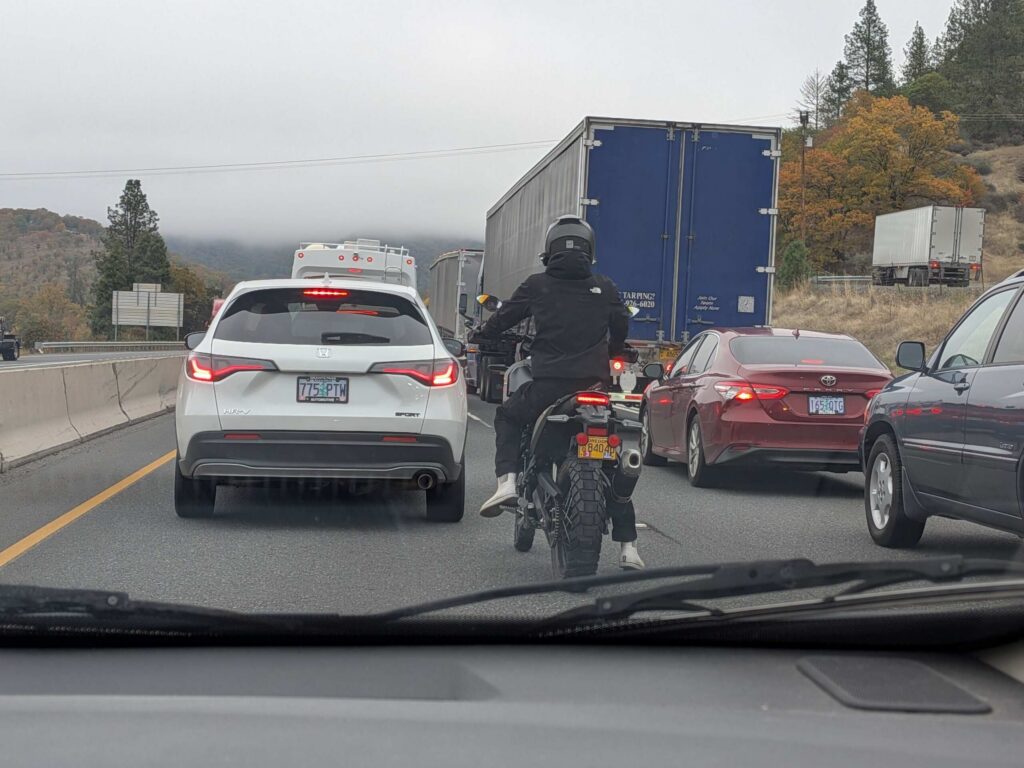
No, lane splitting is not legal in Florida. This is strictly by Florida Statute 316.209, which makes driving a motorcycle between marked traffic lanes completely illegal across the state.
Traffic congestion along major Sunshine State corridors like the Howard Frankland Bridge or Interstate 275 often prompts riders to maneuver between stopped vehicles, but doing so violates state motor vehicle laws.
Whether you suffered severe physical trauma as a rider hit while changing position or as a car driver struck by a filtering motorcycle, contacting a knowledgeable Florida motorcycle attorney for a free case evaluation preserves your legal rights.
Key Takeaways: Lane Splitting in FL
- Florida Statute 316.209 Prohibits Motorcycle Lane Splitting and Filtering on All Public Highways
- Illegal Driving Behaviors Create Strong Presumptions of Comparative Negligence in Civil Injury Lawsuits
- Police Officer Citations Serve as Evidence But Do Not Automatically Decide Civil Lawsuit Liability
- Insurance Adjusters Use Lane Position Arguments to Deny or Reduce Physical Harm Settlement Demands
- Legal Time Limits Require Timely Action to File Injury Lawsuits Against Negligent Drivers and Government Agencies
Is motorcycle lane splitting legal in Florida?
No, motorcycle lane splitting is explicitly illegal under Florida state traffic law.
- Florida Statute 316.209 prohibits motorcycle operators from passing or overtaking vehicles within the same traffic lane.
- Motorcyclists cannot drive between adjacent traffic lanes or lines of stopped or moving vehicles along Florida roads.
- Traffic officers issue moving violation citations to riders who engage in lane splitting or lane filtering maneuvers.
Accidents involving lane splitting create complex legal liability disputes that affect financial recovery options for injured parties.
What Are the Specific Statutes Governing Florida Lane Splitting Laws?
Florida state law establishes clear rules for motorcycle lane usage and prohibits riders from weaving between vehicles or traveling between lanes of traffic. Under Florida Statute 316.209, motorcyclists have the right to full use of a traffic lane, and other motorists cannot operate their vehicles in a way that deprives a motorcycle of that space.
At the same time, the statute places specific restrictions on motorcycle operators. Riders cannot overtake and pass another vehicle within the same lane occupied by that vehicle.
The law also prohibits operating a motorcycle between lanes of traffic or between adjacent lines or rows of vehicles. In other words, Florida law does not permit lane splitting as a way to move between slower or stopped traffic.
A violation of these motorcycle lane-use rules may result in a noncriminal traffic citation and associated penalties.
Are There Any Statutory Exceptions for Police Officers?
Florida law provides explicit statutory exemptions for law enforcement officers operating motorcycles in the line of duty.
Police officers performing official duties can operate motorcycles between traffic lanes when responding to emergencies or directing traffic. Emergency response vehicles maintain this exemption to move quickly through stalled traffic gridlock.
Private citizen riders maintain no legal exemptions under Florida statutes regardless of weather, heat, or traffic delay conditions.
What Is the Difference Between Lane Splitting and Lane Filtering under Florida Rules?
Florida law treats both lane splitting and lane filtering as illegal maneuvers, applying identical statutory penalties to both riding behaviors.
Riders across the country often distinguish between moving through fast traffic and creeping past stopped vehicles at traffic lights. However, Florida motorcycle lane splitting rules do not grant legal passes for slow-speed filtering maneuvers.
How Does Florida Law Define Lane Filtering at Red Lights?
Florida law defines lane filtering as moving a motorcycle between stopped lines of cars to reach the front stop line at an intersection.
States like California allow filtering to protect riders from rear-end collisions, but Florida statutes make no legal exception for this behavior. Moving past stopped cars at a red signal along Tampa Bay roads violates state traffic codes.
If a collision occurs while filtering, insurance adjusters point directly to the statutory violation to assign blame.
Why Do Motorcyclists Advocate for Lane Filtering Rights?
Motorcycle safety groups advocate for filtering laws by arguing that moving between stopped cars shields riders from rear-end collisions caused by distracted drivers.
Riders idling at the back of a traffic line face high risks of catastrophic physical harm if an approaching vehicle fails to brake. Moving between stopped cars creates a physical buffer zone of passenger vehicles around the rider.
Despite these safety arguments, Florida lawmakers have not updated statutes to legalize filtering, meaning the practice remains actionable negligence in court.
How Does Illegal Lane Splitting Affect Fault in a Crash Claim?
Engaging in an illegal traffic maneuver creates a strong legal presumption that your actions contributed to the cause of the collision.
When an accident occurs while a rider splits lanes, insurance companies seize on the illegal maneuver to deny coverage. However, violating a traffic statute does not automatically bar an injured party from recovering financial compensation under state civil law.
How Does Florida's Modified Comparative Fault Rule Apply to Motorcycles?
Florida modified comparative fault law allows you to recover financial damages as long as your assigned fault does not exceed 50 percent.
Under Florida Statute 768.81, the court reduces your final monetary recovery by your exact percentage of responsibility for the crash. For example, if a jury awards $200,000 for medical bills and lost wages but finds the rider 30 percent at fault for splitting lanes, the rider receives $140,000.
If an insurance carrier proves a rider bears 51 percent or more of the overall crash blame, state law prevents the rider from recovering any monetary damages.
Can a Motorist Still Be Found Liable If a Motorcycle Was Splitting Lanes?
Motorists can still carry significant financial liability if their negligent driving behaviors, such as illegal lane changes or distracted driving, contributed to the collision.
Sometimes, a driver changes lanes suddenly without signaling, texting while driving, or opens a car door directly into traffic without checking mirrors. In those situations, an attorney demonstrates that the automobile driver's gross negligence caused the primary impact.
Courts weigh both parties' actions to determine relative percentages of fault rather than automatically blaming the rider entirely.
How Do Insurance Companies Use Lane Splitting to Deny Physical Harm Claims?
Insurance adjusters use evidence of lane splitting to shift fault, delay claim processing, and make low settlement offers to injured victims.
Adjusters know that juries often hold negative biases against motorcyclists, especially when illegal riding behavior occurs. Representatives use police citations to argue that the rider caused the incident entirely, ignoring dangerous driving errors made by car drivers.
Having a skilled attorney handle communications prevents adjusters from taking advantage of your situation or forcing unfair fault allocations.
What Types of Evidence Prove Liability in Motorcycle Collision Cases?
Establishing liability in contested motorcycle accident cases requires collecting objective physical evidence and securing technological records from the crash scene.
Proving what actually happened requires looking beyond initial police summary reports. Legal teams act rapidly to collect physical and digital records before evidence disappears:
- Surveillance video captured by commercial traffic cameras, nearby store security systems, and dashcam units installed in surrounding vehicles.
- Electronic data recorder records retrieved from passenger cars showing vehicle speed, braking times, and sudden steering wheel movements.
- Detailed photographs of tire skid marks, vehicle paint transfer, crushed motorcycle parts, and physical debris spread across lanes.
- Eyewitness statements collected from drivers and pedestrians who observed the vehicles prior to impact.
- Official accident reconstruction reports created by forensic engineering specialists analyzing impact angles and vehicle speeds.
What Physical Harm and Damages Can You Recover in a Legal Claim?
Those injured in severe motorcycle collisions can recover financial compensation for concrete monetary losses and personal physical suffering.
- Past and Future Medical Bills: Full payment for emergency ambulance response, hospital stays, surgeries, prescription drugs, and ongoing physical therapy sessions.
- Lost Wages and Earnings: Direct financial reimbursement for missed paychecks while away from work during your initial recovery phase.
- Reduced Earning Capacity: Financial compensation for long-term reduction in earning potential if permanent physical limitations prevent returning to your trade.
- Physical Pain and Suffering: Financial recovery for ongoing bodily pain, physical restrictions, and loss of daily life enjoyment.
- Property Damage Costs: Complete monetary compensation to repair or replace your damaged motorcycle, helmet, and protective riding gear.
What Actions Should You Take Following a Florida Motorcycle Collision?
Taking deliberate steps after a roadway collision preserves essential legal proof and protects your future personal injury claim.
Gathering proper documentation helps counter claims of unsafe driving behavior. Injured individuals benefit from taking specific, methodical steps following an incident:
- Call emergency medical crews and law enforcement immediately to ensure injured parties receive care and officers document the scene.
- Seek immediate evaluation at a hospital emergency room or urgent care clinic, ensuring doctors record every physical complaint.
- Capture clear photos of all vehicle positions, damaged parts, road hazards, weather conditions, and visible physical injuries.
- Avoid making recorded statements or accepting fault when speaking with insurance adjusters before consulting a legal representative.
- Maintain an organized file containing all medical bills, doctor discharge instructions, prescription receipts, and records of lost work hours.
What Are the Legal Timelines for Filing a Personal Injury Lawsuit in Florida?
Florida law gives you two years from the crash date to file a personal injury lawsuit against a private negligent driver in civil court. If you fail to meet this two-year deadline, Florida courts will dismiss your lawsuit permanently, leaving you responsible for all medical bills and lost wages.
Starting your legal claim early gives your attorney time to locate key witnesses and build a trial-ready case.
What Deadlines Apply to Claims Against Government Entities for Road Defects?
Claims against government agencies for poor road maintenance, missing signs, or hazardous road design require filing a formal notice within three years under Florida Statute 768.28.
When hazardous potholes, loose gravel from road construction, or broken traffic signals cause a motorcycle crash, public entities may share liability. Florida sovereign immunity laws require serving detailed administrative notices to the relevant agency and the Florida Department of Financial Services before filing a lawsuit.
The agency receives a mandatory 180-day investigation period to review your claim, requiring early preparation to meet all statutory requirements.
Why Is Having an Attorney Essential for Handling Motorcycle Injury Claims?
Motorcycle accident claims involve complex fault disputes, anti-biker bias, and aggressive insurance tactics that make legal representation vital.
Insurance adjusters work to protect corporate profits by blaming motorcyclists for crashes, especially when lane positioning is contested. A skilled attorney levels the field by launching independent investigations, hiring accident reconstruction experts, and building evidence that proves the automobile driver's negligence.
Without legal representation, injured victims often face denied claims or accept low settlement offers that fail to cover long-term medical care, lost income, or permanent physical limitations.
Frequently Asked Questions About Lane Splitting Accident Claims in FL
Can I recover money if a lane-splitting motorcycle struck my automobile?
Yes, you can recover financial compensation from the motorcyclist's insurance policy or personal assets if their illegal lane splitting caused damage to your vehicle or caused you physical harm. Proving the rider violated state traffic statutes helps establish their liability for your losses.
Will my insurance rates go up if I was hit by a lane-splitting motorcycle in Florida?
No, Florida Statute 626.9541 prohibits insurance carriers from raising your premium rates for collisions where you were not substantially at fault. As long as official records show the motorcyclist caused the crash, your policy standing remains protected.
What should I do if the police report incorrectly says I was lane splitting?
Contact an attorney immediately to gather independent evidence, such as dashcam footage or witness statements, that refutes the police report. Police officers sometimes make mistakes in initial crash summaries, and your lawyer can present objective proof to correct the record during insurance negotiations.
Does wearing protective motorcycle gear affect my right to financial compensation?
Wearing protective gear helps prevent severe physical harm, but failing to wear full gear does not bar you from seeking compensation under Florida law. Insurance adjusters may try to argue comparative negligence for specific injuries, but an attorney counters these tactics with proper medical evidence.
How much does it cost to retain a lawyer for a Florida motorcycle accident claim?
Our law firm operates on a contingency fee framework, meaning you pay zero upfront costs or out-of-pocket fees to hire our legal team. We cover all investigation and court costs, receiving legal fees only after securing a financial recovery for you through a settlement or jury award.
Contact Roman Austin Car Accident and Personal Injury Lawyers
If you suffered severe physical injuries in a motorcycle collision caused by someone else's negligence in Florida, do not let insurance carriers dictate your financial future or unfairly blame you for the crash.
Our legal team understands Florida traffic laws, and we stand ready to investigate crash scene details, challenge aggressive insurance adjusters, and pursue full compensation for your injuries and financial losses.
Contact Roman Austin Car Accident and Personal Injury Lawyers today at (727) 787-2500 for a free case review with an experienced attorney. We’re available 24/7 to take your call.
Roman Austin Car Accident and Personal Injury Lawyers: 1811 N Belcher Rd, Suite I-1, Clearwater, FL 33765

Mark S. Roman
Board Certified Civil Trial Attorney and Founder
Mark S. Roman is the founder of Roman Austin Car Accident and Personal Injury Lawyers and a Board Certified Civil Trial Lawyer, a credential held by fewer than 2% of Florida attorneys. A Tampa Bay native, he has practiced throughout Florida since 1986 and founded the firm in 1996 to represent injured people in his hometown.
He earned a B.S. in Journalism from the University of Florida in 1981 and his J.D. from Florida State University College of Law in 1986. Mark is AV Rated by Martindale-Hubbell, holds a perfect 10 AVVO rating, and belongs to the Multi-Million Dollar Advocates Forum. He has served on the Florida Bar Grievance Committee for both Pinellas and Pasco counties, chairing the Pasco committee.
Author's Bio

