

John Austin | October 4, 2024 | Bicycle Accidents
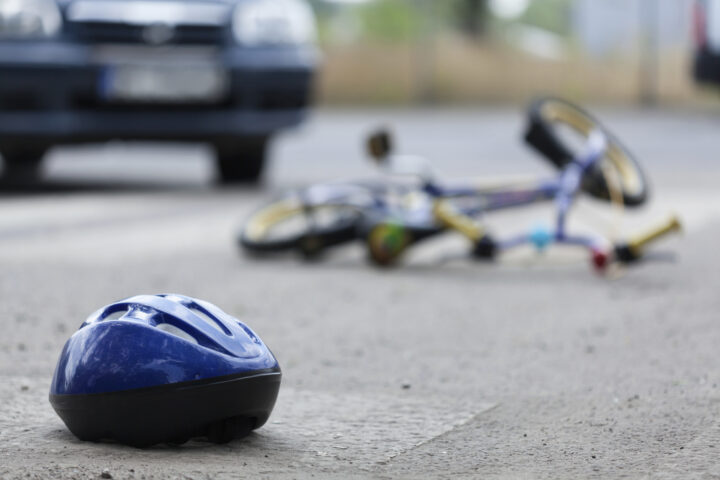
Like many states, Florida has a law that requires youth under a certain age to wear a helmet while riding a bicycle. While adult riders have the choice, choosing to wear one can prevent serious head injuries when involved in a crash.
Bike Helmets Prevent Head Injuries
Bicycle crashes across the nation led to 1,360 fatalities and 337,738 injuries in 2022, according to the National Safety Council (NSC). In Florida, there were 8,413 bicycle accidents in 2023, causing 223 riders to lose their lives.
In 2021, children 14 years and younger represented 4% of all pedalcyclists (riders of any pedal-powered vehicle) killed and 12% of all pedalcyclists injured, U.S. Department of Transportation data shows.
A Centers for Disease Control fact sheet states that adolescents, teens, and young adults have the highest rates of bicycle-related injuries treated in hospital emergency rooms, with riders between 10 and 24 accounting for almost one-third of all injuries.
Wearing a bicycle helmet can lower a bike rider’s risk of a head injury by 60% and a brain injury by 58%, NSC data reveals. Not surprisingly, bicycle helmet laws now exist in 22 states and the District of Columbia. However, the majority of these statewide requirements apply to riders 18 years old and younger.
Florida’s Bike Helmet Law
Florida’s bicycle helmet law was enacted to protect the state’s youngest riders from head injuries. The law mandates that cyclists under 16 years old must wear a properly fitted and fastened helmet when riding on the state’s public roads, pathways, sidewalks, or other common public areas.
Likewise, the law requires bicycle passengers — such as those who ride in trailers or semitrailers attached to a bike — under the age of 16 to wear a helmet.
Helmets must meet the federal safety standards outlined in final rule 16 C.F.R. Part 1203.
Under this rule, helmets are tested to meet the following criteria:
- It doesn’t block the rider’s peripheral vision
- It doesn’t come off if the cyclist falls
- It significantly decreases the impact to the cyclist’s head when it hits a hard surface
- The straps don’t allow the helmet to come off in a crash
To ensure that a helmet fits properly, a head measurement must be taken to select the correct size. The helmet should fall low on the forehead, a finger-width or two over the eyebrows. The side straps must fasten snuggly at the chin, forming a V. Finally, the state recommends replacing a helmet if it has been in a crash, whether it appears damaged or not.
Breaking Bicycle Laws Could Result in Penalties
Bicyclists in Florida must conform to an array of road rules, all designed to increase safety — their own and others on the road. They, of course, must follow the same traffic rules as motorists, such as stopping for traffic lights and stop signs, yielding to pedestrians, and using a bike lamp when riding in the dark.
Cyclists also can’t wear certain headsets, ride with only one hand on the handlebars, or operate a bike while under the influence of alcohol or drugs.
Drivers in the Sunshine State must also be aware of laws pertaining to bicycle safety, such as the three feet law. This rule requires motorists to give bike riders a buffer of a minimum of three feet when they drive next to or pass a bike.
When they violate the law, Florida bike riders are subject to citations and fines. The penalty for riding without a helmet is just $15, but perhaps no monetary value can be placed on the life-saving benefits of wearing one.
Contact the Clearwater Bicycle Accident Law Firm of Roman Austin Car Accident and Personal Injury Lawyers for Help Today
For more information, please contact the legal team of Roman Austin Car Accident and Personal Injury Lawyers for a free initial consultation with a Bicycle accident lawyer in Clearwater. We have convenient locations in Florida: St. Petersburg, Safety Harbor, Clearwater, New Port Richey, and Tampa.
Roman Austin Car Accident and Personal Injury Lawyers – Clearwater Office
1811 N. Belcher Road, Suite I-1
Clearwater, FL 33765
(727) 787-2500


